
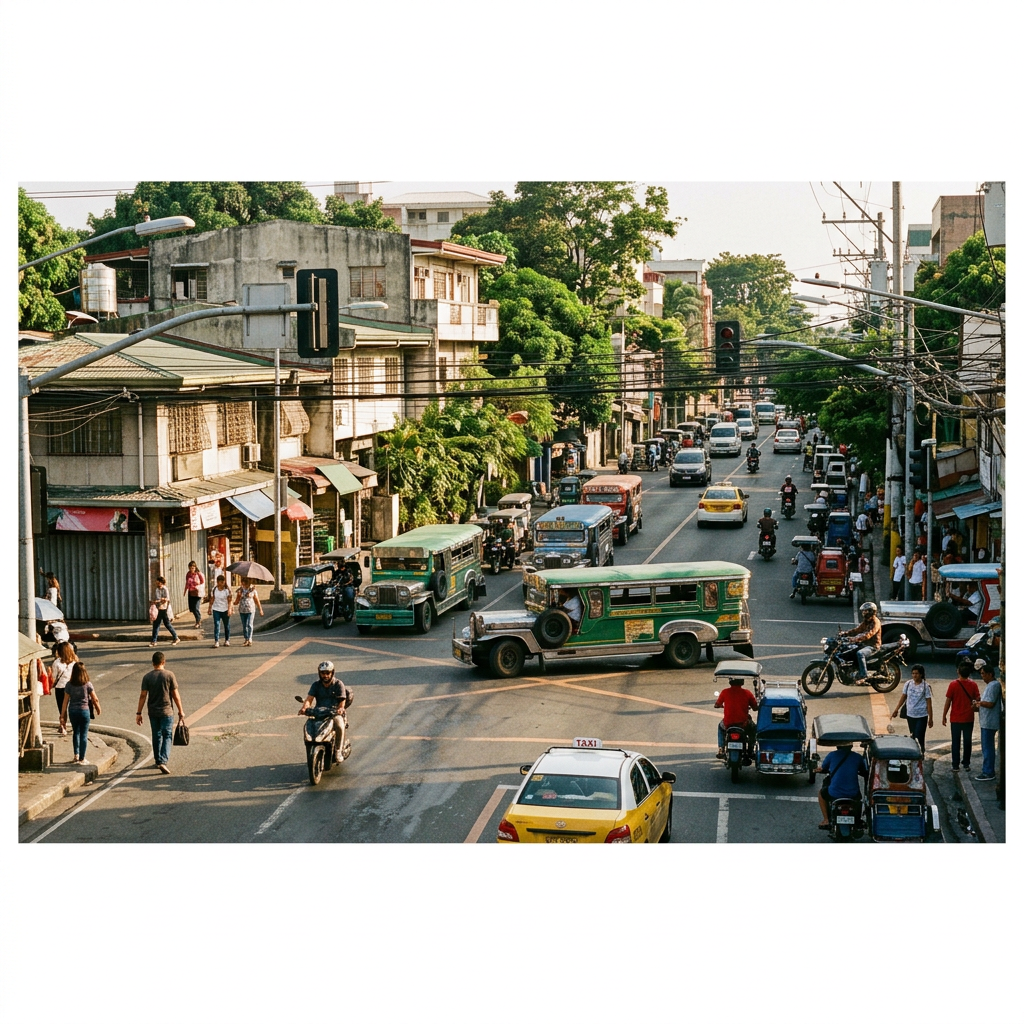
Transportation is an important consideration for anyone planning to live or retire in the Philippines. While the country offers a variety of transportation options that are both affordable and widely available, traffic conditions and infrastructure can vary greatly depending on the city and region. Understanding how Filipinos get around can help retirees choose a location that best fits their lifestyle and transportation needs.
One of the most common forms of transportation throughout the Philippines is the jeepney. Originally created from surplus military vehicles after World War II, jeepneys have become a symbol of Filipino culture and remain a primary mode of public transportation in many cities and towns. They operate along fixed routes and offer an inexpensive way to travel short distances. While jeepneys can be crowded during peak hours, many retirees enjoy experiencing this uniquely Filipino form of transportation.
In smaller cities and provincial areas, tricycles are often the most convenient option for local travel. These motorcycles with attached sidecars serve neighborhoods, markets, schools, and business districts. Tricycles are inexpensive, readily available, and particularly useful for short trips where larger public transportation options may not operate. In many retirement destinations such as Dumaguete, Tagbilaran, Ormoc, and Roxas City, tricycles play a major role in daily transportation.
For longer distances, residents rely on buses, vans, ferries, and domestic airlines. The Philippines consists of more than 7,000 islands, making air and sea travel an important part of everyday life. Major cities such as Cebu, Davao, Clark, Manila, Iloilo, and Puerto Princesa offer regular domestic flights connecting travelers throughout the country. Ferries provide affordable transportation between many islands and are commonly used by both locals and tourists.
Ride-hailing services have become increasingly popular in larger cities. Apps such as Grab allow users to request private transportation through their smartphones, similar to Uber in the United States. Many retirees appreciate the convenience, safety, and transparent pricing provided by these services. Taxis are also widely available in major urban areas, airports, and tourist destinations.
Traffic conditions vary dramatically depending on location. Metro Manila is well known for heavy traffic congestion, particularly during rush hours. Travel times can often be much longer than expected due to the region’s large population and dense development. Areas such as Makati and Quezon City offer excellent healthcare, shopping, and entertainment options but require patience when traveling during peak periods.
Other cities generally experience more manageable traffic conditions. Cebu City can also become congested during busy periods, although traffic is typically less severe than in Manila. Cities such as Iloilo, Dumaguete, Bacolod, Tagbilaran, Puerto Princesa, and Ormoc tend to offer much lighter traffic and shorter travel times. Many retirees specifically choose these locations because of their lower stress levels and ease of transportation.
Clark and Subic Bay are frequently praised for their modern road systems and organized infrastructure. Developed from former U.S. military installations, these areas feature wide roads, reliable traffic management, and convenient access to major expressways. Many retirees who prioritize transportation efficiency consider Clark and Subic among the easiest places to navigate in the Philippines.
For retirees considering vehicle ownership, driving in the Philippines is certainly possible, but local driving styles may differ significantly from those in Western countries. Road conditions, signage, traffic patterns, and driving habits can vary from one region to another. Many expats choose to rely on public transportation, ride-hailing services, and taxis instead of owning a vehicle, particularly in urban areas.
Overall, transportation in the Philippines is affordable, diverse, and accessible. While traffic can be a challenge in some larger metropolitan areas, many retirement destinations offer convenient transportation options and a slower pace of life. Future retirees should consider transportation infrastructure, airport access, and daily travel needs when evaluating potential places to live.
Best Cities for Easy Transportation
🚦 Lowest Traffic
- Dumaguete
- Ormoc
- Tagbilaran
- Roxas City
- Puerto Princesa
🚗 Moderate Traffic
- Iloilo
- Bacolod
- Davao
- General Santos
- Cagayan de Oro
🚕 Higher Traffic
- Cebu City
- Clark
- Subic Bay
- Quezon City
- Makati
🚙 Most Congested
- Metro Manila
Final Thoughts
Transportation is often overlooked when choosing a retirement destination, but it can significantly impact quality of life. Some retirees prefer the convenience and amenities of larger cities despite heavier traffic, while others prioritize shorter travel times and a more relaxed pace of life. Fortunately, the Philippines offers options for every lifestyle, from bustling metropolitan centers to peaceful provincial communities where getting around is simple and affordable.
Leave a Reply