
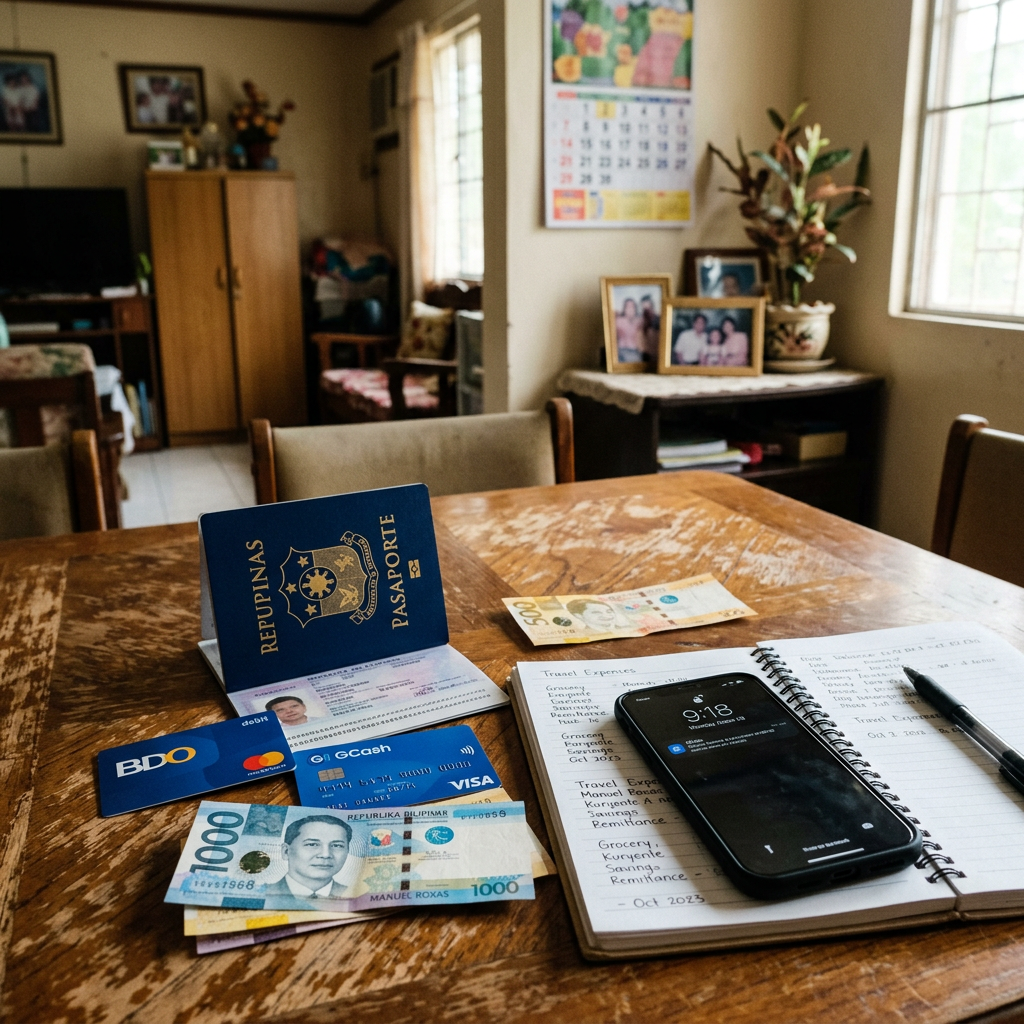
Moving to the Philippines changes many parts of everyday life, but one of the most important things to get right is how you will manage your money.
You need to think about where your retirement income will be deposited, how you will access cash, whether you should open a Philippine bank account, how much money to keep in pesos, how to transfer funds from abroad, and how to protect yourself from fraud and unnecessary fees.
The good news is that banking in the Philippines is not especially difficult once you understand how the system works. Many expats continue using their home-country bank while also adding a Philippine bank account or digital wallet for local expenses.
The key is not to depend on only one account, one debit card, or one way of accessing money.
Keep Your Home-Country Bank Account
For most retirees, keeping at least one bank account in your home country is a very good idea.
Your Social Security, pension, annuity, investment income, or other retirement funds may already be deposited there. Keeping that account can make it easier to manage taxes, maintain credit cards, pay bills back home, and preserve a financial connection to your home country.
It also gives you a backup if you experience a problem with a Philippine bank account.
Some expats eventually move more of their everyday banking to the Philippines, but there is usually little reason to close every account you already have.
Think of your financial life as becoming international rather than completely relocating from one banking system to another.
Do Not Depend on One Debit Card
This is one of the simplest but most important rules for living overseas.
Bring at least two ways to access your money.
That could mean:
- Two debit cards from different banks
- A debit card and a credit card
- A backup checking account
- A Philippine bank account
- An emergency credit card
Cards can be lost, stolen, frozen, compromised, or swallowed by an ATM.
If your only debit card stops working while you are thousands of miles from home, a small inconvenience can quickly become a serious problem.
Keep your backup card somewhere separate from your primary wallet.
Can Foreigners Open a Bank Account in the Philippines?
Foreign nationals can open Philippine bank accounts, but the requirements vary by bank, residency status, and account type.
The Bangko Sentral ng Pilipinas has specific rules governing peso deposit accounts for non-residents, and banks are required to follow customer-identification and anti-money-laundering requirements. That means a bank may ask for more documentation than you are accustomed to providing.
Depending on the institution and your status, you may be asked for documents such as:
- Passport
- Philippine address
- Alien Certificate of Registration or other immigration documentation
- Proof of income or source of funds
- Local phone number
- Tax identification information
- Additional identification
The exact requirements can differ between banks and even between account types, so ask the bank directly what is required before visiting a branch.
Do not be surprised if opening an account takes longer than expected.
Which Philippine Banks Should You Consider?
The Philippines has several large national banks with branches and ATMs throughout the country.
Commonly used institutions include:
- BDO
- BPI
- Metrobank
- Security Bank
- UnionBank
- RCBC
- Philippine National Bank
The best bank is not necessarily the biggest one.
Consider:
- Branches near your home
- ATM availability
- Online banking
- Mobile app quality
- International transfer options
- Customer service
- Minimum balance requirements
- Fees
If you are going to live in Cebu, Dumaguete, Iloilo, Davao, or another city, ask long-term residents which banks are convenient in that particular area.
Philippine Deposits Are Insured
Money held in Philippine banks can be protected by the Philippine Deposit Insurance Corporation, or PDIC.
As of 2026, the maximum deposit insurance coverage is ₱1 million per depositor, per bank. The coverage was increased from ₱500,000 to ₱1 million effective March 15, 2025.
This means that if you keep large amounts of cash in Philippine banks, it may make sense to understand how deposit-insurance limits work.
For many retirees, there is no need to move their entire retirement portfolio into the Philippine banking system.
A local account can simply hold the money needed for everyday living.
Keep Most of Your Long-Term Retirement Money Where It Is Safe and Familiar
Moving to the Philippines does not mean you need to transfer your entire retirement nest egg into pesos.
For many expats, a simpler system is to keep investments, retirement accounts, and large cash reserves in their home country while transferring only the amount needed for several weeks or months of Philippine expenses.
This can reduce exposure to currency fluctuations and make it easier to maintain access to financial institutions you already trust.
Your Philippine account can then function primarily as your everyday spending account.
You might use it for:
- Rent
- Utilities
- Groceries
- Local transfers
- Transportation
- Restaurants
- Household expenses
This approach also keeps your long-term retirement money separate from day-to-day spending.
Understand the Exchange Rate
Your retirement income may be earned in dollars, pounds, euros, Australian dollars, Canadian dollars, or another currency, while most of your Philippine expenses will be paid in pesos.
That means exchange rates matter.
If the peso weakens against your home currency, your income may buy more locally. If the peso strengthens, your Philippine expenses may effectively become more expensive.
Do not build your retirement plan around one unusually favorable exchange rate.
Use a conservative exchange-rate assumption when preparing your budget so you can still afford your lifestyle if the currency moves against you.
Exchange rates change every day, so check the current rate before making a large transfer.
Avoid Exchanging Large Amounts at the Airport
Airports are convenient, but convenience does not always mean the best exchange rate.
It is reasonable to exchange enough money for transportation, food, and immediate expenses when you arrive. Once you are settled, compare bank rates, authorized money changers, ATMs, and international transfer services before moving larger amounts.
Always use legitimate financial institutions or established exchange businesses.
Saving a few pesos is not worth the risk of using an unreliable money changer.
ATMs Are Convenient, but Fees Can Add Up
ATMs are widely available in cities and many larger towns.
Using a foreign debit card may involve more than one fee. You can potentially face a fee from the Philippine ATM operator, a fee from your home bank, and a foreign-currency conversion charge.
The Bangko Sentral regulates ATM fee structures, but actual charges depend on the bank and transaction.
Before moving, investigate whether your home bank:
- Reimburses international ATM fees
- Charges foreign-transaction fees
- Has daily withdrawal limits
- Blocks overseas transactions
- Requires travel notifications
A bank account designed for international travelers can save a surprising amount of money over a year.
Do Not Withdraw Tiny Amounts Repeatedly
If your bank charges a fixed fee every time you use an ATM, making frequent small withdrawals can become expensive.
Instead of withdrawing a small amount every day, some retirees withdraw enough cash to cover several days or a week of normal spending.
The important balance is not carrying more cash than you are comfortable losing.
Keep only the cash you need in your wallet and store the rest securely at home.
Should You Carry Cash?
Yes.
The Philippines is becoming increasingly digital, but cash is still important.
You may need cash for:
- Public markets
- Jeepneys
- Tricycles
- Small restaurants
- Sari-sari stores
- Street vendors
- Tips
- Small local businesses
In larger cities and shopping centers, cards and digital payments are widely accepted.
A practical approach is to carry a reasonable amount of cash while also keeping a card and digital-payment option available.
Small Bills Are Useful
Do not underestimate the value of small peso bills.
Trying to pay for a ₱50 purchase with a ₱1,000 note can create problems if the vendor does not have change.
Keep smaller denominations available for transportation, markets, tips, and neighborhood businesses.
This becomes second nature after you have lived in the Philippines for a while.
Digital Wallets Are Part of Everyday Life
Digital payments have become increasingly common in the Philippines.
Services such as GCash and Maya are widely used for everyday transactions, although eligibility and account-verification requirements can vary for foreign users.
Digital wallets may be used for:
- Sending money
- Paying bills
- Mobile load
- Shopping
- Restaurant payments
- Online purchases
- QR payments
They can be extremely convenient once you are established.
However, do not keep more money in a digital wallet than you need for normal spending.
Treat it like a wallet, not a retirement account.
InstaPay and PESONet
The Philippines has two major electronic fund-transfer systems that you may encounter: InstaPay and PESONet.
InstaPay is designed for real-time transfers and is commonly used for smaller everyday transactions. PESONet is commonly used for larger or less time-sensitive transfers between participating financial institutions.
Fees vary by bank, and BSP regularly publishes information about which institutions offer free or waived transfer fees. In 2026, several supervised financial institutions were offering zero-peso or waived InstaPay and PESONet charges for certain transactions.
Once you have a Philippine bank account, these services can make paying rent or transferring money locally much easier.
International Money Transfers
You will probably need to move money from your home country to the Philippines periodically.
You generally have several options:
- Bank wire transfers
- International money-transfer services
- Transfer apps
- ATM withdrawals
- Remittance companies
Each option has a different combination of fees, exchange rates, transfer speed, and limits.
Do not compare only the advertised transfer fee.
A service that advertises a low fee may make money through a less favorable exchange rate.
Compare the amount of pesos that actually arrives in your Philippine account.
That is the number that matters.
Transfer Smaller Amounts Until You Understand the System
When you first begin sending money internationally, start with a relatively small test transfer.
Make sure the account details are correct.
Confirm how long the transfer takes.
Verify what fees are deducted.
Check the exchange rate.
Once everything works correctly, you can transfer larger amounts with more confidence.
Sending a large sum to the wrong account is a mistake you want to avoid.
Credit Cards Can Be Useful
A good credit card can be valuable for:
- Hotels
- Flights
- Large purchases
- Online transactions
- Emergency expenses
Try to use a card that does not charge foreign-transaction fees if possible.
Philippine banks and card issuers may apply foreign-exchange conversion fees when transactions involve another currency, so always understand how your card handles international charges. BSP publishes comparative information on fees and charges imposed by supervised financial institutions.
Credit cards also provide another backup payment method if your debit card is temporarily unavailable.
Be Careful When an ATM Offers to Convert the Currency for You
You may encounter an ATM or card terminal that asks whether you want the transaction converted into your home currency.
This is sometimes called dynamic currency conversion.
The exchange rate offered through that option may be less favorable than allowing your own bank or card network to perform the conversion.
Read the screen carefully before accepting.
When in doubt, understand the exchange-rate and fee implications before agreeing to the conversion.
Protect Yourself From Financial Scams
Expats and retirees can become attractive targets for fraud because scammers may assume foreigners have access to substantial money.
Be cautious when anyone asks for:
- Banking passwords
- One-time passwords
- PIN numbers
- Credit-card details
- Cryptocurrency
- Emergency loans
- Unusual transfers
- Investment money
Legitimate banks should not ask you to disclose sensitive passwords or one-time authentication codes to another person.
Never allow someone else to control your online banking because they claim they are helping you navigate the Philippine system.
Be Suspicious of Urgency
Financial scams frequently depend on panic.
You may receive a message claiming that your bank account has been frozen, your package is being held, someone has experienced a medical emergency, or you must transfer money immediately.
Slow down.
Contact the bank, hospital, government agency, or business directly using contact information you independently verify.
Do not use the phone number or link provided in a suspicious message.
Urgency is often the scammer’s greatest weapon.
Keep Banking and Romance Separate
If you begin a relationship after moving to the Philippines, keep your financial life under your control.
Do not quickly add someone to your bank account, give them your debit card, disclose your PIN, or allow them to manage your retirement funds.
A healthy relationship does not require immediate financial access.
Take your time.
Relationships can grow.
Financial access should be earned much more slowly.
Do Not Keep Your Entire Emergency Fund in Pesos
Your emergency savings should be accessible even if something disrupts the local banking system or you need to leave the Philippines quickly.
Many retirees keep part of their emergency fund in their home country.
That can provide money for:
- Emergency airfare
- Medical treatment
- Family emergencies
- Temporary housing
- Unexpected travel
Having money in more than one country and more than one financial institution creates redundancy.
That is useful when you live overseas.
Watch Your Account Regularly
Check your accounts frequently.
You do not need to obsess over every transaction, but look for purchases or withdrawals you do not recognize.
Set up alerts for:
- ATM withdrawals
- Purchases
- Large transactions
- International transactions
- Password changes
The earlier you identify fraud, the easier it may be to stop additional losses.
Keep Your Contact Information Current
If your home-country bank still thinks you live at an old address or has an outdated phone number, account verification can become difficult.
Before moving, determine what information your bank allows you to update and how it handles customers living overseas.
You should also know how you will receive replacement cards.
A mail-forwarding service or trusted family address can be helpful for some expats.
Keep Copies of Important Financial Information
Do not keep everything only on your phone.
Maintain secure records of:
- Bank phone numbers
- Card numbers
- Account information
- International contact numbers
- Insurance details
Do not store passwords in an unsecured document.
Use a reputable password manager and enable multi-factor authentication whenever possible.
If your wallet and phone disappear at the same time, you should still be able to contact your financial institutions.
What Should Your Banking Setup Look Like?
A simple expat banking system might look something like this:
Home-country primary account: Retirement income and long-term financial management.
Home-country backup account: Emergency access if the primary account has a problem.
Philippine bank account: Rent, utilities, groceries, transportation, and local transfers.
Credit card: Travel, large purchases, and backup.
Digital wallet: Small everyday payments.
This is not the only way to organize your finances.
The important thing is creating more than one path to your money.
A Good Monthly Money Routine
Once you are settled, managing money can become very simple.
You might transfer enough money into your Philippine account once or twice per month to cover expected expenses. Pay rent and utilities from that account, use cash or digital payments for everyday purchases, and leave long-term investments and emergency reserves elsewhere.
Track your spending during the first several months.
You will quickly learn what your real cost of living is.
That number is more useful than any online estimate because it reflects your actual lifestyle.
Final Thoughts
Banking in the Philippines does not need to be complicated.
Keep your primary financial foundation secure.
Maintain accounts in your home country.
Have more than one card.
Open a Philippine account when it becomes useful.
Learn how local transfers and digital payments work.
Pay attention to exchange rates and fees.
Keep some cash, but not too much.
Most importantly, never place yourself in a situation where one lost debit card or one frozen bank account separates you from all of your money.
Living overseas requires a little more financial planning, but once the system is established, managing your money can become routine.
The goal is not to constantly think about banking.
It is to create a system reliable enough that you do not have to.
Then your retirement money can do what you intended it to do in the first place:
Support the life you came to the Philippines to enjoy.