
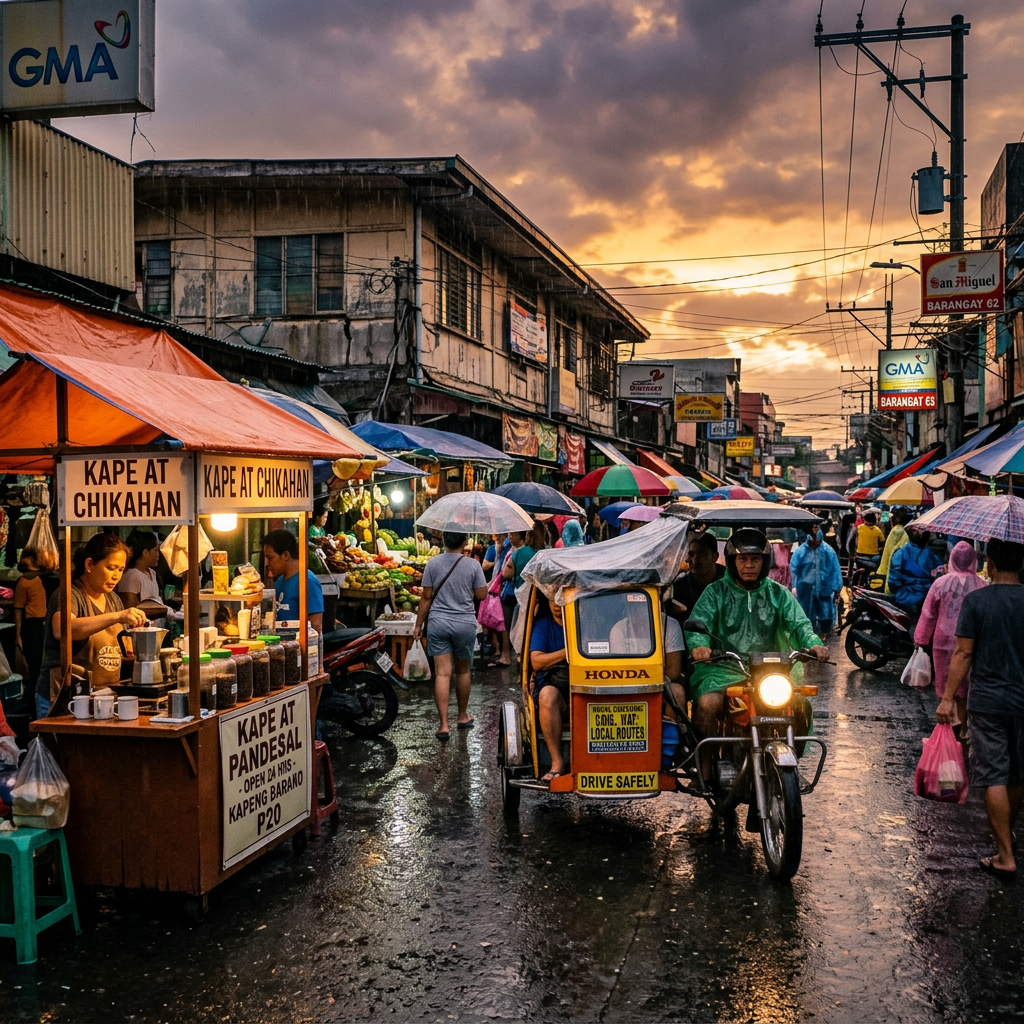
When people imagine living in the Philippines, they often picture beaches, palm trees, inexpensive meals, and warm weather.
Those things are part of the experience, but everyday life is usually much more ordinary.
You still wake up, make coffee, buy groceries, pay bills, run errands, schedule doctor appointments, wait in traffic, do laundry, and decide what to cook for dinner. The difference is that the surroundings, pace, culture, and cost of many everyday activities may feel very different from what you were used to back home.
For many expats and retirees, that is exactly the appeal.
Living in the Philippines is not about being on vacation every day. It is about building a normal life in a place that may offer more flexibility, warmer weather, easier access to travel, and a different relationship with time and community.
Here is what everyday life can actually look like.
Mornings Often Start Early
In much of the Philippines, mornings are one of the best parts of the day.
The temperature is usually more comfortable, traffic may be lighter, and neighborhoods begin coming to life early. You may hear roosters, motorcycles, delivery riders, vendors, schoolchildren, and neighbors beginning their routines.
Many retirees quickly learn to do errands earlier in the day. A morning walk, trip to the market, grocery run, or coffee stop can be far more pleasant before the midday heat arrives.
You may also discover that you become more aware of the weather than you were back home. Heat, humidity, and afternoon rain can shape your schedule, so many people simply adjust their day around the climate.
Coffee Becomes Part of the Routine
Coffee culture has grown throughout the Philippines, especially in cities such as Manila, Cebu, Davao, Iloilo, Baguio, and Dumaguete.
Some people prefer large international chains, while others develop a favorite local café where the staff eventually remembers their order. In smaller communities, the daily coffee stop can become as much about conversation as caffeine.
For retirees, this can become an important part of the social routine. A thirty-minute coffee break may turn into an hour because someone you know walks in and sits down.
That slower pace is something many newcomers come to appreciate.
Grocery Shopping Is a Mix of Familiar and Local
You can shop in large modern supermarkets and find many familiar products, especially in major cities.
You will also discover that imported products often cost more.
If you insist on buying the exact brands you used at home, grocery costs can rise quickly. If you become comfortable with local products, fresh produce, rice, fish, meat, and Filipino brands, your money can usually go further.
Many residents combine supermarkets with local markets.
The supermarket is convenient for packaged products, dairy, cleaning supplies, and imported items. The public market can be excellent for fresh fish, vegetables, fruit, meat, herbs, and local ingredients.
Over time, shopping can become less about “Where can I find the food from home?” and more about discovering what is fresh and available locally.
The Local Market Can Become Part of Your Social Life
A Philippine public market can feel overwhelming the first time you visit.
There is movement everywhere.
Vendors are calling out prices. Fish is being cleaned. Meat is being cut. Fruit and vegetables are stacked in rows. People are negotiating, carrying bags, and moving between stalls.
After several visits, however, the market begins to feel familiar.
You start recognizing vendors.
They recognize you.
You learn who has the best mangoes, which stall has the fish you like, and where to buy vegetables at a fair price.
At that point, grocery shopping becomes more than a chore.
It becomes part of everyday community life.
Eating Out Can Be More Frequent
For many retirees, one of the pleasant differences is that eating out can become more affordable than it was in their home country.
That does not mean every restaurant is cheap. Upscale restaurants, imported food, luxury hotels, and tourist areas can still be expensive.
But there are many lower-cost options.
You may eat at:
- Local carinderias
- Food courts
- Cafés
- Bakeries
- Barbecue stands
- Fast-food restaurants
- Neighborhood restaurants
- Seafood places
- Mall restaurants
This can change the rhythm of retirement.
Instead of deciding whether you can afford to eat out this month, you may find yourself deciding which restaurant you feel like visiting today.
Transportation Depends Heavily on Where You Live
Everyday transportation in the Philippines can look completely different depending on your city.
In Manila, you may use Grab, taxis, trains, jeepneys, buses, or walk depending on the neighborhood.
In Cebu, you may rely on Grab, taxis, jeepneys, or your own vehicle.
In smaller cities, tricycles and motorcycles can become part of daily transportation.
Some retirees eventually decide they do not need a car at all.
That can be liberating.
You are no longer dealing with parking, insurance, maintenance, repairs, registration, and fuel costs.
On the other hand, someone living outside a city center may find a vehicle extremely useful.
There is no one correct answer.
Traffic Becomes Part of the Calculation
Traffic is one of the realities of life in many Philippine cities.
A short distance on a map does not necessarily mean a short travel time.
This is why choosing the right neighborhood matters so much.
Living close to the places you use most can dramatically improve your daily life.
If the grocery store, hospital, coffee shop, pharmacy, and restaurants you like are all nearby, you may spend far less time sitting in traffic.
Many long-term residents eventually organize their lives geographically.
They stop crossing the city for things they can find closer to home.
Shopping Malls Play a Bigger Role Than You Might Expect
Shopping malls in the Philippines are more than places to shop.
They often function as community centers.
Inside a large mall, you may find:
- Grocery stores
- Restaurants
- Coffee shops
- Pharmacies
- Banks
- Medical clinics
- Government-service counters
- Movie theaters
- Gyms
- Salons
- Hardware stores
- Electronics
- Clothing
- Entertainment
In hot weather, malls also provide one more important thing:
Air conditioning.
A retiree may go to the mall for lunch, pick up medication, buy groceries, pay a bill, get a haircut, and watch a movie without leaving the building.
That convenience becomes part of everyday life in many cities.
Home Life Can Be Simpler
Many retirees downsize after moving.
A smaller condo or apartment may be easier to maintain than the house they left behind.
You may no longer need a garage, basement, yard equipment, snow blower, multiple vehicles, or rooms you rarely use.
Household life can also be different because some services are more affordable.
Depending on your budget and location, you may occasionally use:
- Laundry service
- House cleaning
- Food delivery
- Water delivery
- Repair services
- Ride-hailing
- Handyman services
This does not mean everyone lives with household help.
It simply means that paying someone to handle an occasional task may be financially practical.
Utilities Require Adjustment
Electricity is one expense that can surprise newcomers.
Running air conditioning constantly can produce a much larger bill than expected.
Many residents learn to combine air conditioning with fans, good ventilation, curtains, and timing. You may cool one room rather than the entire home or use air conditioning primarily while sleeping.
Water service varies by location, and many households use purified drinking water delivered in large containers rather than drinking directly from the tap.
Internet quality has improved substantially in many urban areas, but service can still vary from one building or neighborhood to another.
Backup mobile data is a good idea if staying connected is important.
Delivery Apps Make Life Easier
One of the conveniences many newcomers quickly adopt is delivery.
Food delivery is widely available in larger cities, and other apps can deliver groceries, pharmacy items, documents, and packages.
Ride-hailing apps also reduce the need to negotiate transportation or explain directions.
These services can make daily life surprisingly easy, especially during heavy rain, extreme heat, or days when you simply do not feel like leaving home.
Cash Still Matters
Digital payments are increasingly common, but cash remains useful.
Small restaurants, local markets, tricycles, street vendors, neighborhood stores, and some smaller businesses may prefer or require cash.
Many residents therefore carry a mixture of cash and digital-payment options.
Small bills are particularly useful.
Handing someone a large bill for a very small purchase can create an awkward search for change.
Weather Shapes Your Day
The climate becomes part of everyday planning.
You may leave home under bright sunshine and experience heavy rain later that afternoon.
You learn to carry an umbrella.
You learn which streets flood.
You learn not to schedule everything too tightly during severe weather.
You may also begin organizing activities around the heat.
Morning errands.
Lunch.
Rest during the hottest part of the afternoon.
Back out in the evening.
Once you stop trying to force a cooler-climate schedule onto tropical life, things often become easier.
Laundry Works Differently for Many People
Some apartments have washing machines.
Others do not.
Laundry shops are common in many neighborhoods, and wash-dry-fold services can be affordable enough that some retirees simply drop off a bag and pick it up later.
This may seem like a small detail, but it is exactly the kind of thing that changes your daily routine.
Living abroad is often defined by these small practical differences rather than the dramatic experiences people post online.
Healthcare Becomes Part of Normal Life
If you are retired, you will eventually need routine healthcare.
That may include dental cleanings, prescription refills, doctor appointments, laboratory tests, or specialist visits.
In larger cities, private hospitals and clinics can offer a broad range of services, and English is commonly used by medical professionals.
The biggest adjustment may be learning how appointments, payments, insurance, and hospital systems work.
Once you establish your doctors and know where to go, healthcare simply becomes another part of your routine.
People May Be More Involved in Your Everyday Life
Filipino communities can feel more socially connected than what some foreigners are accustomed to.
Neighbors may notice when you are away.
Security guards may greet you every morning.
A restaurant owner may ask where you have been if you have not visited for a while.
People may ask questions about your family, relationship, or plans that would feel unusually personal in your home country.
Most of the time, this is not intended to invade your privacy.
It can simply reflect a more socially connected culture.
Over time, those small interactions can make a new place feel less anonymous.
Family Life Is Everywhere
Family plays an enormous role in everyday Filipino life.
Restaurants are filled with families.
Shopping malls are filled with families.
Weekends often revolve around family gatherings.
Birthdays, baptisms, weddings, fiestas, graduations, and holidays can involve large groups of relatives.
If you develop close Filipino friendships or enter a relationship, you may quickly find yourself included in those gatherings.
That can be one of the most rewarding parts of living in the Philippines.
It can also require some cultural adjustment if you come from a more individualistic background.
Holidays Feel Different
The Philippines takes celebrations seriously.
Christmas is the most famous example.
You may see Christmas decorations and hear holiday music months before December.
But throughout the year, communities celebrate fiestas, religious events, city festivals, birthdays, and local holidays.
These events affect traffic, business hours, transportation, and daily schedules.
They can also become some of the most memorable parts of living here.
Sunday Can Feel Different
In many communities, Sunday has a noticeably slower and more family-oriented feel.
Church attendance remains important for many Filipinos, and restaurants and malls may fill with families after services.
Depending on where you live, Sunday may become the day for a long lunch, coffee with friends, a trip to the mall, or simply staying home.
Retirement gives you the freedom to stop thinking of the weekend as the only time you are allowed to relax.
Tuesday can become your Saturday.
That takes some getting used to.
Your Social Life Requires Some Effort
Retirement does not automatically create friendships.
You still need to put yourself in situations where you meet people.
That might mean joining an expat group, volunteering, going to a gym, attending community events, playing golf, joining a church, visiting the same café regularly, or simply talking with neighbors.
Friendships with other expats can make the transition easier because they understand many of the challenges you are experiencing.
Friendships with Filipinos can give you a much deeper understanding of the country.
The healthiest social life usually includes both.
You May Spend More Time Outdoors
One of the biggest lifestyle differences is how much of life can happen outdoors.
You may eat outside, walk along a waterfront, sit at a café, visit a beach, or simply spend time on a balcony.
In many parts of the world, winter pushes everyone indoors for several months.
That is not the normal pattern in most of the Philippines.
The weather may be hot or rainy, but outdoor life remains available throughout the year.
Small Errands Can Take Longer Than Expected
Not everything is faster or easier.
Government offices can require patience.
Banking procedures may involve more paperwork than you expected.
Internet installation may take longer.
Traffic can turn a simple errand into a larger project.
A product you assumed would be available may require visiting several stores.
This is where attitude matters.
If every inconvenience becomes evidence that “nothing works here,” you may become miserable quickly.
If you treat occasional inconvenience as part of living somewhere different, it becomes much easier to manage.
You Will Still Have Boring Days
This may be one of the most important things to understand.
There will be days when nothing interesting happens.
You will watch television.
You will scroll through your phone.
You will cook dinner.
You will take a nap.
You will stay home because it is raining.
You may even feel bored.
That does not mean moving was a mistake.
It means you live here now.
A successful retirement is not one where every day is exciting.
It is one where the ordinary days are still comfortable and enjoyable.
You Eventually Stop Comparing Everything
During your first few months, you may constantly notice differences.
The grocery store is different.
The traffic is different.
The food is different.
The service is different.
The weather is different.
Then something changes.
You stop comparing every experience with your home country.
You learn where to shop.
You know what things should cost.
You understand how transportation works.
You know which restaurants you like.
You know which hospital to use.
You understand your neighborhood.
The unfamiliar becomes normal.
Your Neighborhood Starts Feeling Like Home
This is perhaps the biggest transformation.
At first, you are the new foreigner.
Then people begin recognizing you.
The security guard knows your name.
The coffee shop remembers your order.
The fruit vendor knows what you buy.
Your neighbors wave when you walk past.
You know which streets to avoid during heavy rain.
You know the quickest route to the grocery store.
None of these things is dramatic.
Together, however, they create a sense of belonging.
Everyday Life Is Different in Every City
Life in BGC is completely different from life in Dumaguete.
Cebu is different from Davao.
Baguio is different from Bohol.
A provincial town may be completely different from all of them.
That is why choosing where to live is so important.
Some people want convenience, large hospitals, restaurants, shopping, and international airports.
Others want quiet streets, lower rent, fewer foreigners, and easier access to nature.
The Philippines offers both.
Your job is to find the version that fits you.
Final Thoughts
Everyday life in the Philippines is not a permanent vacation.
And that may actually be one of the best things about it.
The beaches, islands, waterfalls, and weekend trips are still there when you want them.
But most of your life will be built from smaller moments.
Morning coffee.
A trip to the market.
Lunch with a friend.
A Grab ride across town.
A conversation with your neighbor.
A heavy afternoon rainstorm.
A grocery run.
A sunset you almost forgot to notice because you see them so often.
Eventually, those ordinary moments become your routine.
Then your routine becomes your life.
And somewhere along the way, the Philippines stops feeling like the place you moved to.
It simply starts feeling like home.