
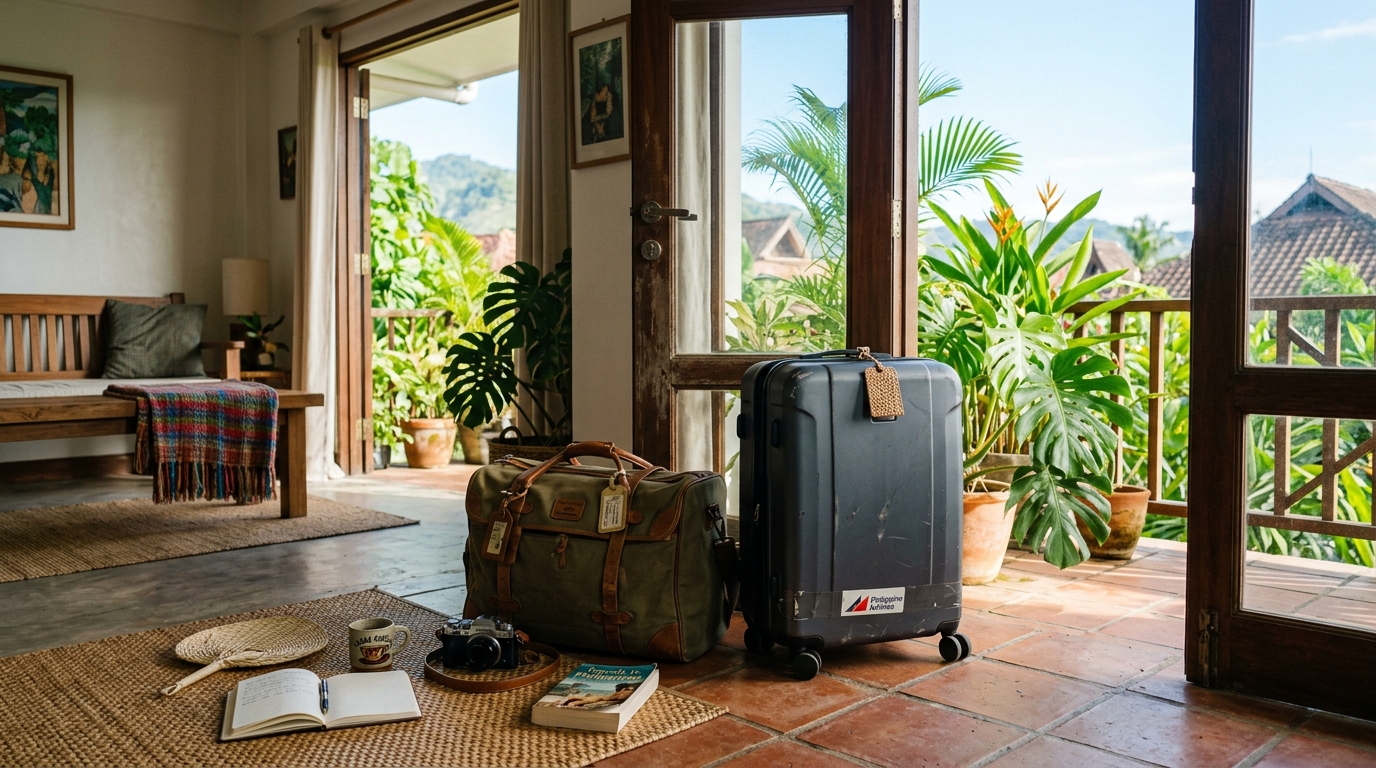
You’ve decided to move to the Philippines.
Now you’re standing in your house looking at everything you’ve accumulated over the last 20, 30 or 40 years.
Furniture.
Clothes.
Kitchen equipment.
Televisions.
Tools.
Books.
Photographs.
Electronics.
Boxes you haven’t opened since your last move.
And suddenly you’re facing one of the hardest questions about moving overseas:
What comes with you?
It’s tempting to think you have two choices.
Ship everything.
Or sell everything and arrive with two suitcases.
For most retirees, the best answer is somewhere in between.
Some things are difficult or expensive to replace in the Philippines. Some things are incredibly easy to replace. Some items aren’t worth the cost and aggravation of shipping halfway around the world.
And some things you won’t realize you need until you’re already here.
The goal isn’t to bring your American house to the Philippines.
It’s to bring the things that will make your Philippine life easier. Before packing, our step-by-step moving guide can help you plan the rest of the move.
Start With One Rule: Don’t Ship Your Life Until You’ve Built Your New One
This may be the most important advice in this article.
If possible, don’t send a household full of belongings to the Philippines before you’ve even decided exactly where you’re going to live.
You may think you’re moving permanently to Cebu.
Six months later you may decide you prefer Dumaguete.
Or Iloilo.
Or Subic.
You may rent a large two-bedroom condo and later realize you only need one bedroom.
You may imagine yourself living in a house and discover you prefer a condominium with security, backup power and a swimming pool.
Everything you ship reduces your flexibility.
During your first few months, flexibility is incredibly valuable.
Bring the Things That Are Difficult to Replace
The best things to bring aren’t necessarily the most expensive.
They’re the things that would be annoying, difficult or impossible to replace.
Start with documents.
Passport.
Birth certificate.
Marriage or divorce records if applicable.
Social Security information.
Tax records you may need.
Insurance documents.
Estate documents.
Medical records.
Prescription information.
Financial records.
Professional licenses if relevant.
Important property documents.
Keep the most critical documents in your carry-on luggage.
Don’t put your passport, birth certificate and irreplaceable records inside a box sailing across the Pacific.
And don’t rely solely on paper.
Scan important documents before leaving and keep secure digital backups.
Bring Your Laptop
For most retirees, I’d bring the computer you already know and trust if it’s reasonably current.
You’re going to use it for banking, Social Security, email, video calls, taxes, travel reservations and probably a hundred other things.
Arriving in another country isn’t the ideal moment to simultaneously learn a completely new computer.
Major electronics are certainly available in the Philippines, particularly in Manila and Cebu.
But model selection and pricing can differ from the United States.
If you’re already planning to replace an aging laptop, compare prices and warranties before departure. Buying in America may make sense in some cases, while buying locally can make warranty service easier.
Either way, don’t forget something almost as important as the computer:
your passwords.
Make sure your password manager, authentication apps and account-recovery methods will work after you leave your U.S. phone service.
Bring More Than One Way to Charge Everything
Adapters and charging equipment are small.
Bring them.
Phone chargers.
Laptop charger.
USB cables.
Portable battery pack.
Multi-port USB charger.
A few plug adapters if your equipment requires them.
The Philippines generally uses 220-volt, 60-Hz electricity, although outlet types can vary.
Many modern electronics—laptops, phones, tablets and USB chargers—are designed for a broad voltage range such as 100–240 volts.
But don’t assume.
Look at the label on the power supply.
If it says something similar to:
INPUT: 100–240V, 50/60Hz
you’re generally dealing with a dual-voltage power supply.
If it only says 120V, plugging it directly into Philippine 220V power can destroy the device and potentially create a safety hazard.
Leave Most 120-Volt Appliances in America
This is where people can make an expensive mistake.
That favorite American coffee maker?
Toaster?
Air fryer?
Hair dryer?
Power tool?
Kitchen appliance?
If it’s designed only for 110–120 volts, seriously consider leaving it behind.
Yes, voltage transformers exist.
But do you really want your new Philippine kitchen filled with transformers so you can keep using appliances that could have been replaced locally?
Probably not.
Sell or donate most single-voltage household appliances.
Then buy equipment designed for Philippine electrical standards after you arrive.
Don’t Ship Your Television
Unless there’s an unusual reason, I’d leave it.
The same applies to many large electronics.
Televisions are readily available in the Philippines.
They’re large.
They’re fragile.
They’re awkward to ship.
And technology keeps improving.
Selling your American television and purchasing another after you know the size and layout of your Philippine home will usually make more sense than sending one across an ocean.
Clothing: Bring Less Than You Think
Look at your closet.
Now imagine wearing most of it in tropical heat.
Heavy sweaters?
Winter coats?
Thick jackets?
Multiple suits?
You probably don’t need them.
Bring lightweight clothing you actually wear.
Shorts.
T-shirts.
Lightweight pants.
Breathable shirts.
Underwear.
Swimwear.
Comfortable walking clothes.
A light rain jacket.
Perhaps one nicer outfit for occasions when shorts and sandals aren’t appropriate.
Keep one set of warmer clothing if you’ll travel to cooler destinations, spend time in places such as Baguio, or return to the United States.
But you don’t need a Pennsylvania winter wardrobe in Cebu.
Bring Shoes That Fit You Well
Clothing is generally easy to replace.
Shoes can be different.
If you have an unusually large, wide or difficult-to-find shoe size, bring several pairs you know are comfortable.
The same applies if you use orthopedic footwear or specialized shoes.
Walking conditions in the Philippines can also be different from what you’re accustomed to.
Uneven sidewalks, wet surfaces and tropical rain make comfortable, slip-resistant footwear valuable.
Shoes don’t take much room compared with furniture.
Bring the good ones.
Bring Prescription Glasses
If you wear glasses, bring your current pair.
And bring a backup.
Glasses and eye care are available in the Philippines, often at attractive prices.
But losing or breaking your only pair during your first week is an unnecessary problem.
Bring a copy of your prescription as well.
The same logic applies to hearing aids and other small personal devices you rely on.
Bring the equipment, accessories and information needed to keep them functioning while you establish local care.
Medications Require Planning
Don’t simply throw a year’s worth of medication into your suitcase without checking the rules.
Before moving, talk to your doctor.
Get copies of your prescriptions.
Know the generic names of your medications, not just the American brand names.
Ask which medications are readily available in the Philippines.
Keep medication in its original labeled packaging when practical.
And verify Philippine requirements if you’re bringing controlled drugs, injectable medications or unusually large quantities.
Philippine customs and health regulations place limits on some regulated products brought in for personal use.
The rules can depend on the product and quantity.
Medication planning is something to do before departure, not after you’ve taken your last pill in Cebu.
Bring a Basic Medical Supply Kit
You don’t need to ship a pharmacy.
Philippine pharmacies are everywhere in populated areas.
But arriving with a small supply of the products you already know work for you can make the transition easier.
Think about:
Prescription medication.
Pain reliever.
Basic first aid.
Any specific skin-care product you rely on.
Dental supplies.
Contact lenses.
Specialized medical supplies.
Then gradually replace those items locally as you learn what’s available.
Toiletries: Don’t Waste Suitcase Space
Shampoo is sold in the Philippines.
So is toothpaste.
Soap.
Deodorant.
Razors.
Shaving cream.
Laundry detergent.
Cleaning supplies.
Most everyday personal-care products aren’t worth transporting halfway around the world.
There is one exception.
If you use a very specific product because of allergies, sensitive skin or another personal need, bring enough to give yourself time to find an alternative.
Otherwise, buy toiletries after you arrive.
Bring Your Favorite Small Things
Not every moving decision needs to be financially optimized.
Maybe you have a coffee mug you’ve used every morning for 20 years.
Bring it.
Family photographs.
A small piece of artwork.
A favorite book.
Something your child made.
A few Christmas decorations.
An object that makes a strange apartment feel like your home.
Bring those too.
You’re not abandoning your previous life.
You’re building the next part of it.
Just don’t confuse sentimental value with the need to ship an entire house.
Books Are Heavy
This hurts if you’re a reader.
Books seem harmless until you put 40 of them in a box.
Then try lifting it.
If you own hundreds of books, this may be the perfect time to decide which ones actually matter.
Keep favorites.
Keep irreplaceable books.
Digitize what makes sense.
Consider an e-reader for everyday reading.
Donate or sell the rest.
Paying international freight to move a paperback you can replace for a few dollars doesn’t make much sense.
Kitchen Equipment: Be Ruthless
Open your kitchen cabinets.
How much of that equipment do you actually use?
Bring specialty items that are difficult to replace and don’t take much room.
A favorite chef’s knife, for example, may be worth packing properly in checked luggage if airline and customs rules allow it.
But pots?
Pans?
Plates?
Glasses?
Toaster?
Microwave?
Rice cooker?
You can buy them in the Philippines.
And yes, you can definitely buy a rice cooker in the Philippines.
Leave it.
Furniture Is Usually a No
Your couch isn’t going to miss you.
Neither is your dining-room table.
Unless you own valuable, irreplaceable or deeply sentimental furniture, selling or donating it before moving usually makes more sense.
Your Philippine home may be smaller.
The layout may be completely different.
Many rentals come furnished.
You don’t even know what you’ll need yet.
Imagine spending thousands of dollars shipping furniture to Cebu only to discover that your new furnished condo already has everything.
Now you’re paying someone to store furniture you paid someone else to ship.
Don’t create that problem.
Tools Depend on Your Lifestyle
If you enjoy working on things, a small collection of quality hand tools might be worth bringing.
Specialized tools can also be worth keeping.
But don’t automatically ship your entire American garage.
Power tools create the voltage problem again.
Large tool chests are heavy.
And if you’re moving into a condominium, ask yourself how many major home-repair projects you’re realistically going to undertake.
Bring the tools that fit your future life.
Not the life you’re leaving.
What About a Car?
For most American retirees:
Leave it.
Importing a vehicle into the Philippines isn’t comparable to checking another suitcase.
Vehicles are heavily regulated imports, and Philippine customs rules specifically exclude vehicles from several personal-effects duty exemptions.
There are specialized circumstances where importing may be possible, but this isn’t something to casually arrange with your household shipment.
For most retirees, selling the American vehicle and deciding later whether you even need a car in the Philippines is far simpler.
You may discover that Grab, taxis and other transportation meet most of your needs.
Be Careful With the Phrase “Balikbayan Box”
You’ll hear this constantly.
Balikbayan boxes are an important part of Filipino life overseas, allowing qualifying Filipinos to send personal and household goods home under specific customs privileges.
But an American retiree shouldn’t assume that every special tax exemption associated with balikbayan boxes automatically applies to them.
Philippine law provides specific privileges for Filipino citizens, returning residents, overseas Filipino workers and certain overseas Filipinos.
Foreign travelers also have rules governing personal effects and goods for their own use.
The important lesson is simple:
The box isn’t what creates the tax privilege. Your legal status and the goods inside matter.
If you’re shipping substantial household goods as a foreign retiree, confirm the current customs requirements with the Philippine Bureau of Customs and your freight company before shipping.
Don’t rely on something someone said in an expat Facebook group.
Customs Doesn’t Disappear Because Something Is “Used”
Another common assumption is:
“It’s my personal property, so customs doesn’t apply.”
Not necessarily.
Philippine customs rules generally treat imported goods as subject to duties and taxes unless a specific exemption applies.
Travelers have allowances and personal-effects provisions, but the rules depend on the goods and circumstances.
If you’re bringing expensive electronics, large quantities of goods or shipping household possessions separately, understand the rules first.
And declare items when declaration is required.
Saving a few dollars isn’t worth creating a customs problem during your first day in your new country.
Don’t Bring Food Unless There’s a Reason
You will occasionally hear new expats planning suitcases full of American food.
You don’t need six months of peanut butter.
Large supermarkets in Manila, Cebu and other major cities carry substantial selections of imported products.
Some will cost more than they did in America.
Others may be difficult to find.
But part of moving overseas is adapting.
Bring a favorite seasoning or specialty item if it matters to you.
Don’t devote half your luggage allowance to groceries.
You can survive without your exact brand of barbecue sauce.
Probably.
What About Costco-Sized Supplies?
Leave them.
One thing American shopping teaches us is to buy enormous quantities of everything.
That doesn’t always translate well to Philippine living.
Your condo may have considerably less storage.
Humidity can affect stored products.
And buying six months of something doesn’t save money if you have nowhere sensible to put it.
Buy for the home you’re actually going to have.
Don’t Ship Things “Just in Case”
This is where shipping gets out of control.
Maybe you’ll need it.
Maybe someone will visit.
Maybe you’ll start woodworking.
Maybe you’ll need four sets of sheets.
Maybe you’ll entertain 12 people.
Maybe you’ll suddenly want that bread maker you haven’t used since 2018.
Stop.
If you haven’t used something in years in America, moving it 8,000 miles probably won’t make you start using it.
The Six-Month Test
Here’s a simple rule.
Ask:
Have I used this during the last six months?
If not, ask:
Is it genuinely irreplaceable or emotionally important?
If both answers are no, it probably doesn’t need to move to the Philippines.
This isn’t perfect.
But it will eliminate an astonishing amount of stuff.
Bring, Buy There, or Leave Behind?
Here’s the basic PLG approach.
BRING
Important documents.
Laptop and essential personal electronics.
Unlocked phone.
Prescription medications and documentation.
Prescription glasses plus backup.
Specialized medical items.
Good shoes, especially unusual sizes.
A reasonable wardrobe.
Important financial records.
A few quality personal tools if you’ll actually use them.
Small sentimental belongings.
Irreplaceable photographs.
Secure digital backups.
Essential chargers and cables.
BUY IN THE PHILIPPINES
Television.
Most furniture.
220-volt kitchen appliances.
Rice cooker.
Microwave.
Fans.
Most bedding.
Dishes.
Pots and pans.
Cleaning supplies.
Most toiletries.
Everyday household goods.
Basic tools.
Most groceries.
Umbrellas—and you’ll probably need one.
LEAVE BEHIND
Large 120-volt appliances.
Most furniture.
Old electronics.
Excess winter clothing.
Boxes you haven’t opened in years.
Huge book collections.
Duplicate kitchen equipment.
Bulk household supplies.
Most power tools designed only for 120 volts.
Things you’re bringing solely because you might someday need them.
And almost anything you can replace for less than it costs to ship.
The Two-Suitcase Experiment
Even if you eventually plan to ship belongings, consider starting with what you can carry on the airplane.
Pack as though you’re going to live in the Philippines for three months.
What would you bring?
That’s probably much closer to what you actually need than what you’d select while standing in a house filled with decades of possessions.
Take your suitcases.
Rent somewhere furnished.
Live.
Then after three months, ask yourself:
What do I genuinely miss?
That’s when you decide whether anything else needs to cross the Pacific.
You may be surprised by how short the list is.
Your New Life Doesn’t Need All Your Old Stuff
Moving overseas creates an unusual opportunity.
For decades, you’ve accumulated things because you had space to keep them.
Retirement gives you permission to reconsider all of it.
You don’t need to recreate your American living room in Cebu.
You don’t need every plate.
Every tool.
Every coat.
Every book.
Every piece of furniture.
Keep what’s useful.
Keep what’s meaningful.
Keep what’s difficult to replace.
Let the rest go.
Because the goal isn’t to successfully transport everything you own to the Philippines.
The goal is to arrive with enough freedom to figure out how you actually want to live once you’re here.
And freedom weighs considerably less than a shipping container.
The Philippine Living Guide Packing Rule
Before putting anything into a box, ask three questions:
Is it difficult to replace in the Philippines?
Is it worth more to me than the cost and trouble of transporting it?
Will it fit the life I’m actually planning to live?
If the answer to all three is no, don’t ship it.
Sell it.
Donate it.
Give it to someone who will use it.
Then take the money you would have spent shipping it and use that money to start your Philippine life.
Customs Reminder
Philippine customs rules depend on the traveler’s status, the type and value of goods, whether items accompany the traveler or are separately shipped, and whether a particular exemption applies. Special balikbayan-box and returning-resident privileges have eligibility requirements and should not be assumed to apply to every foreign retiree. Check current requirements with the Philippine Bureau of Customs and your carrier or freight forwarder before shipping substantial household goods.
Disclaimer
Philippine Living Guide provides general educational and informational content for people considering travel, relocation or retirement in the Philippines. Customs, airline baggage, medication, importation and tax rules can change and can vary according to the traveler and goods involved. This article isn’t legal, customs, tax, medical or immigration advice. Verify current requirements with the Philippine Bureau of Customs, Philippine authorities, your airline and appropriate professionals before traveling or shipping belongings.
Leave a Reply