
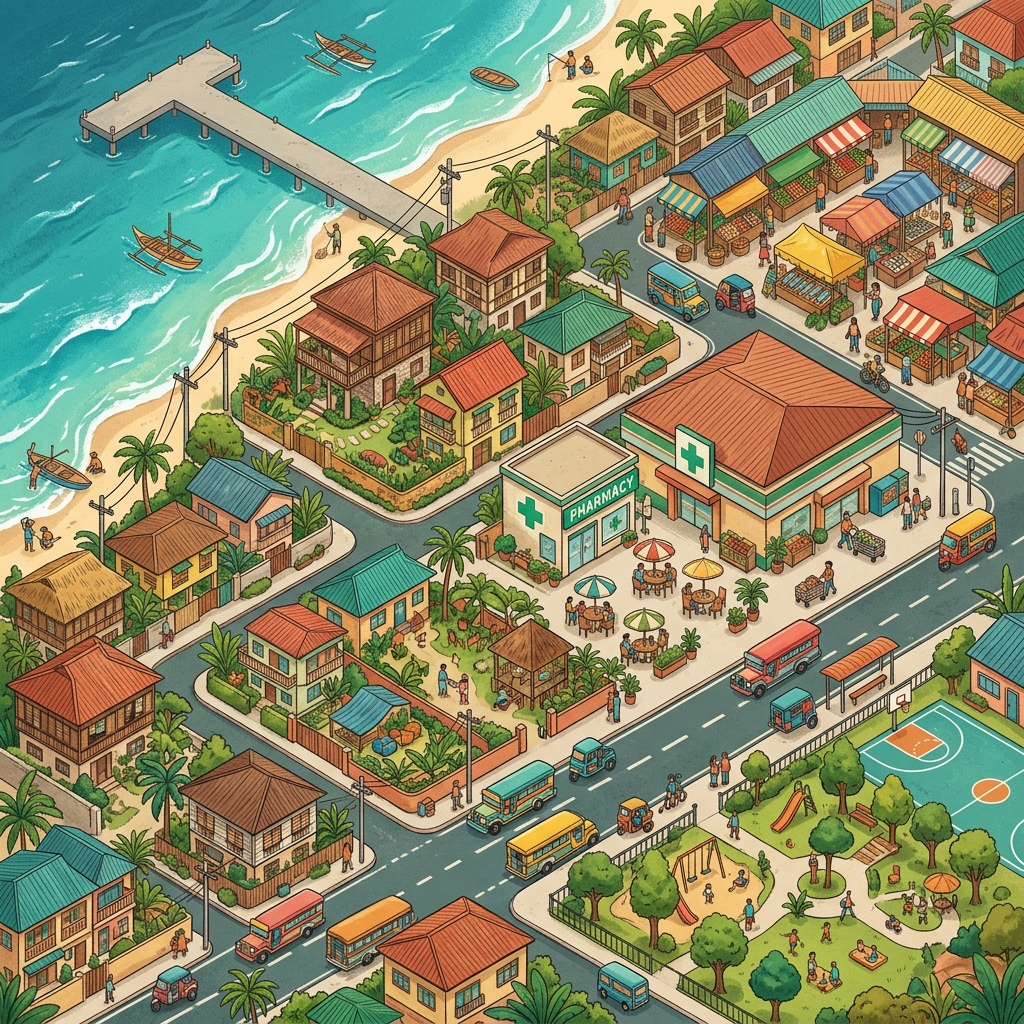
For most people moving to the Philippines, renting an apartment is the smartest way to begin their new life.
Even if your long-term goal is to buy a home or condominium, experienced expats almost always recommend renting first. Living in a neighborhood for several months gives you time to learn the area, understand your daily commute, meet your neighbors, and decide if it’s really where you want to settle.
The Philippines offers everything from modern high-rise condominiums in major cities to simple apartments in small provincial towns. With so many choices, finding the right place can feel overwhelming.
The good news is that with a little planning, you can avoid costly mistakes and find a home that fits both your lifestyle and your budget.
Let’s walk through the process step by step.
Step 1: Decide What Kind of Lifestyle You Want
Before looking at apartments, think about how you want to live.
Ask yourself:
- Do I want to live in a busy city or a quiet province?
- Would I rather be near the beach or close to shopping and hospitals?
- Will I own a vehicle or use public transportation?
- Do I want to walk to restaurants and grocery stores?
- Is reliable internet important for work or video calls?
Choosing the right neighborhood is often more important than choosing the perfect apartment.
Step 2: Set a Realistic Budget
Many retirees move to the Philippines because housing is more affordable than in many Western countries.
However, rent varies greatly depending on the city and location.
Generally speaking:
- Smaller provincial towns are usually the most affordable.
- Mid-sized cities often provide an excellent balance of price and convenience.
- Major business districts and tourist destinations typically have the highest rents.
When creating your budget, don’t forget additional expenses such as:
- Electricity
- Water
- Internet
- Mobile phone service
- Parking (if applicable)
- Association or maintenance fees (sometimes included, sometimes separate)
A good rule is to budget for your total monthly housing costs—not just the advertised rent.
Step 3: Choose the Right Type of Housing
The Philippines offers several types of rentals.
Condominiums
Popular in larger cities.
Advantages:
- Security
- Swimming pools
- Fitness centers
- Backup generators (in many buildings)
- Modern amenities
- Convenient locations
Potential drawbacks:
- Higher rent
- Association rules
- Smaller living spaces
Apartments
Apartments are available almost everywhere.
Advantages:
- Often more affordable
- Greater variety
- Flexible locations
Potential drawbacks:
- Amenities vary widely
- Security depends on the building
- Parking may be limited
Houses
Some retirees prefer renting a house.
Advantages:
- More living space
- Private yard
- Better for pets
- Greater privacy
Potential drawbacks:
- More maintenance
- Higher utility costs
- Longer travel times depending on location
Step 4: Find Available Rentals
There are many ways to search for apartments.
Popular methods include:
- Local real estate agents
- Property management companies
- Facebook community groups
- Local classifieds
- Word-of-mouth recommendations
- Expat forums
- Walking neighborhoods and looking for “For Rent” signs
Never rely on photos alone.
Whenever possible, visit the property in person before signing a lease.
Step 5: Inspect the Apartment Carefully
An apartment may look perfect online but be very different in person.
Take your time during the viewing.
Check:
- Water pressure
- Air conditioning
- Ceiling fans
- Windows and screens
- Doors and locks
- Internet availability
- Electrical outlets
- Lighting
- Appliances
- Plumbing
- Signs of leaks or mold
Don’t be afraid to turn on faucets, flush toilets, and test appliances.
You’re going to live there.
Step 6: Ask the Right Questions
Before signing anything, ask the landlord or property manager:
- What utilities are included?
- Is internet already installed?
- How much is the security deposit?
- How long is the lease?
- Are pets allowed?
- Is parking available?
- Who pays for repairs?
- Is there backup power?
- How is garbage collected?
- What happens if I need to leave early?
Good landlords expect these questions.
Step 7: Understand the Lease
Read every page of the lease agreement.
Pay attention to:
- Lease length
- Deposit requirements
- Payment schedule
- Renewal terms
- Maintenance responsibilities
- Guest policies
- Move-out procedures
If something isn’t clear, ask before signing.
Never assume.
Step 8: Watch Out for Rental Scams
Like anywhere in the world, rental scams exist.
Be cautious if:
- Someone asks for large payments before you’ve seen the property.
- The rent seems far below market value.
- The “landlord” refuses to meet.
- You are pressured to send money immediately.
- Photos look overly professional but don’t match the description.
Whenever possible:
- Meet in person.
- Verify ownership or management.
- Get receipts for every payment.
- Use written agreements.
If something feels wrong, walk away.
There will always be another apartment.
Step 9: Set Up Utilities and Internet
After moving in, you’ll need to make your apartment feel like home.
This may include:
- Internet service
- Mobile phone plan
- Electricity account (if required)
- Water service (if required)
Ask your landlord which services are already active and which you’ll need to arrange yourself.
Reliable internet should be a priority if you work remotely or regularly video call family.
Step 10: Get to Know Your Neighborhood
Your apartment is only part of your new home.
Spend your first few weeks exploring.
Locate:
- Grocery stores
- Pharmacies
- Hospitals
- Banks
- Coffee shops
- Public transportation
- Parks
- Restaurants
- Local markets
Learning your neighborhood will make everyday life easier and help you feel more connected to your community.
Should You Rent Before Buying?
For nearly every newcomer, the answer is yes.
Even if you’re certain you’ve found your dream city, renting first gives you the opportunity to:
- Experience different neighborhoods.
- Understand the local lifestyle.
- Learn commuting times.
- Build local knowledge.
- Avoid making an expensive mistake.
Many experienced expats recommend renting for at least six to twelve months before considering a property purchase.
Apartment Viewing Checklist
Before leaving each apartment, ask yourself:
✓ Did I test the water pressure?
✓ Is the internet reliable?
✓ Is the neighborhood quiet at night?
✓ Are grocery stores nearby?
✓ Is there a hospital within a reasonable distance?
✓ Is the apartment well maintained?
✓ Do I feel safe here?
✓ Can I picture myself living here every day?
Sometimes your instincts are just as important as the price.
Final Thoughts
Finding your first apartment in the Philippines isn’t about choosing the fanciest building or the lowest rent.
It’s about finding a place that fits your lifestyle.
Take your time.
Ask questions.
Visit several properties.
Talk to local residents.
Explore the neighborhood both during the day and after dark.
Most importantly, remember that your first apartment doesn’t have to be your forever home.
One of the greatest advantages of renting is flexibility.
As you learn more about the Philippines, your needs may change—and that’s perfectly okay.
A little patience during your apartment search can make the difference between simply living in the Philippines and truly feeling at home there.
Leave a Reply