
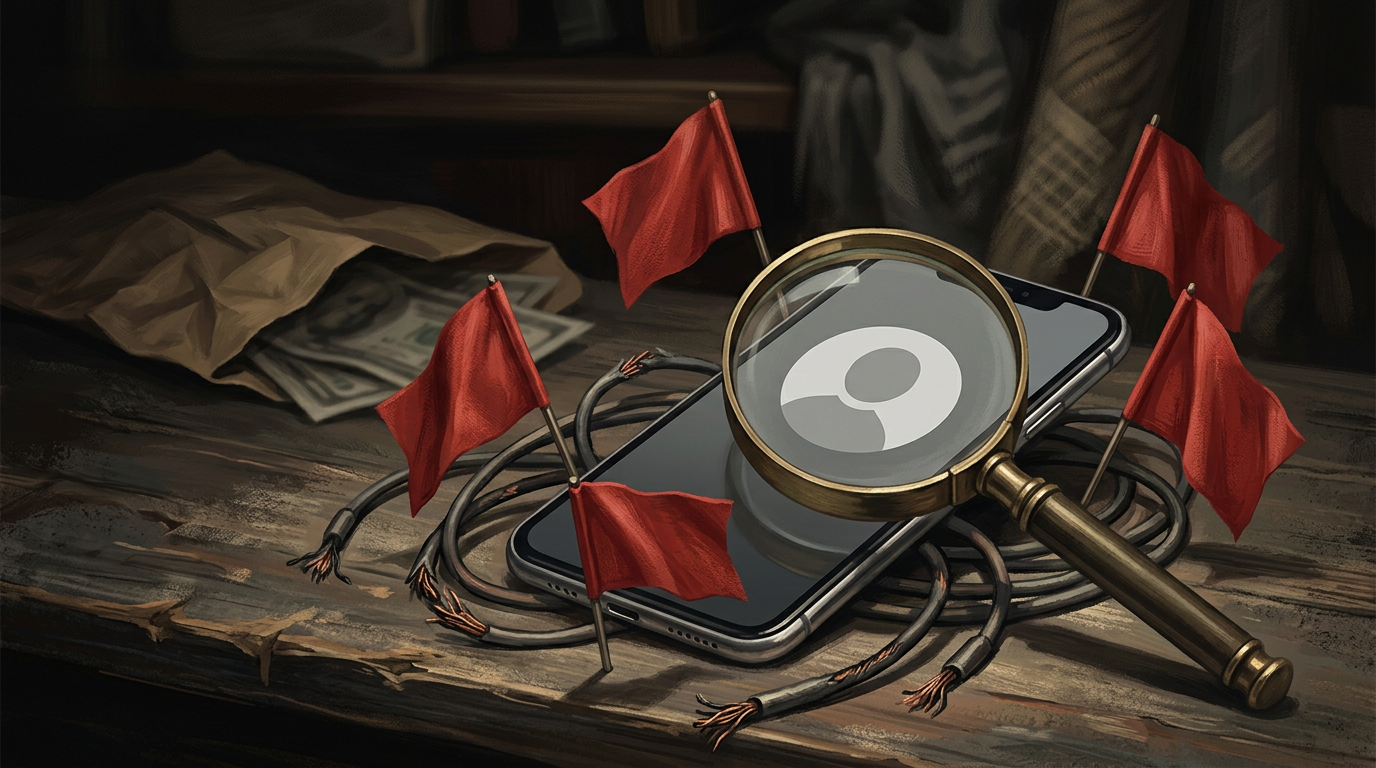
Meeting someone special can be one of the most rewarding parts of starting a new life in the Philippines.
Many foreigners form genuine friendships, lasting relationships, and happy marriages there. However, as in every country, dishonest people sometimes use dating sites, social media, messaging apps, or chance encounters to manipulate others for money.
Romance scams do not happen because someone is foolish.
They happen because skilled scammers know how to create trust, emotional attachment, urgency, and sympathy. They often spend weeks or months building a relationship before asking for anything.
The best protection is not becoming suspicious of everyone.
It is learning how to recognize unhealthy patterns, protecting your finances, and allowing trust to develop slowly.
What Is a Romance Scam?
A romance scam occurs when someone pretends to have romantic feelings in order to obtain money, gifts, financial information, immigration assistance, property, or some other benefit.
Some scammers operate alone. Others may be part of organized networks using stolen photographs, fake profiles, scripted conversations, and multiple identities.
The relationship may begin on:
- A dating app
- Facebook or another social platform
- A messaging app
- An expat discussion group
- An online game
- A language-exchange site
- An unsolicited text message
- An in-person meeting
The platform is not what determines whether someone is trustworthy.
Their behavior does.
Romance Scams Can Happen to Anyone
Romance scammers target people of every age, gender, nationality, and income level.
Retirees and people living abroad may be particularly vulnerable because they can be:
- Far from family and longtime friends
- Adjusting to an unfamiliar culture
- Living alone
- Seeking companionship
- Perceived as financially comfortable
- Unfamiliar with local customs or prices
Scammers often look for emotional circumstances they can exploit. Loneliness, grief, divorce, retirement, and a recent international move can all make a person more receptive to sudden attention.
That does not mean you should avoid dating.
It means you should keep your emotions and financial decisions separate.
Warning Sign 1: The Relationship Moves Extremely Fast
One of the most common warning signs is an unusually rapid emotional connection.
A person may begin calling you:
- Their soulmate
- The love of their life
- Their future spouse
- A blessing from God
- The person they have waited for all their life
This may happen after only a few days or weeks.
Strong feelings can develop quickly, but scammers deliberately accelerate relationships because emotional attachment makes financial manipulation easier. The FBI warns that rapid declarations of love, intense emotional pressure, and a relationship that seems unrealistically perfect can signal fraud.
A genuine person should respect your desire to move slowly.
Warning Sign 2: There Is Always a Crisis
Romance scams frequently revolve around emergencies.
Common stories involve:
- A sick child or parent
- Hospital or medication expenses
- Funeral costs
- Unpaid rent
- Tuition or school fees
- A lost phone
- A broken motorcycle
- A business problem
- Travel expenses
- A family member in trouble
- A package supposedly stuck in customs
The first request may be small.
Once you pay, another emergency often follows.
The FTC warns that scammers commonly create medical emergencies, travel problems, shipping fees, and other urgent situations to pressure their targets into sending money.
Real people experience emergencies, but a new romantic partner should not treat you as an emergency fund.
Warning Sign 3: They Ask for Money Before You Have Met
Never send money to someone you know only through the internet.
This includes money for:
- Plane tickets
- Passports
- Visas
- Medical treatment
- Food
- Rent
- Phone service
- Transportation
- Business investments
- Family emergencies
A person may promise to repay you or say the money is the only thing preventing the two of you from being together.
That emotional pressure is exactly what makes the request dangerous.
The FTC and FBI advise treating a request for money from an online love interest—especially someone you have never met—as a major indication of fraud.
Warning Sign 4: They Refuse to Video Chat or Meet
A scammer may claim that:
- Their camera is broken.
- Their internet is too weak.
- They are shy.
- Their employer does not allow video calls.
- They are working at sea.
- They are deployed with the military.
- They live in another province.
- A family emergency prevented the meeting.
One excuse may be believable.
A repeated pattern is not.
Scammers often promise to meet and then cancel at the last minute. Some use stolen photographs of military members, professionals, models, or ordinary social-media users. Federal consumer and law-enforcement agencies identify repeated refusal to video chat or meet in person as a common romance-scam warning sign.
A video call is not absolute proof of identity because recorded and AI-generated material can be manipulated, but refusing all real-time interaction is a serious concern.
Warning Sign 5: Their Story Keeps Changing
Pay attention to inconsistencies.
You may notice changes in:
- Age
- Birthday
- Hometown
- Employment
- Education
- Family members
- Relationship history
- Daily schedule
- Location
- Financial circumstances
A scammer speaking with several targets may forget which story they told you.
Do not explain away repeated contradictions simply because you want the relationship to be real.
Trust requires consistency.
Warning Sign 6: They Quickly Move You Off the Dating Platform
A new contact may immediately ask to switch to:
- Telegram
- Messenger
- Text messaging
There are legitimate reasons to use another app, but scammers often want to leave a dating platform before their profile is reported or removed.
The FBI advises caution when someone quickly pressures you to communicate outside the original dating service or social network.
Stay on the original platform until you feel comfortable, and never let someone pressure you into secrecy.
Warning Sign 7: They Want Gift Cards, Cryptocurrency, or Wire Transfers
The requested payment method can reveal a scam.
Be especially cautious when someone asks for:
- Gift cards
- Cryptocurrency
- Wire transfers
- Prepaid debit cards
- Cash transfers
- Money sent through a payment app
- Access to your online banking
These methods can be difficult or impossible to reverse.
Government consumer agencies repeatedly warn against sending money to an online love interest through cryptocurrency, gift cards, wire transfers, or payment apps.
A legitimate partner should not pressure you to use a payment method designed to prevent recovery.
Warning Sign 8: They Introduce an Investment Opportunity
Modern romance scams increasingly involve fake investments.
After building trust, the person may claim to have earned money through:
- Cryptocurrency trading
- Foreign exchange
- Gold
- Real estate
- An online investment platform
- A private business opportunity
They may show screenshots of profits or allow you to withdraw a small amount at first. Later, they pressure you to invest more.
The FTC warns that an online love interest who offers to teach you how to invest in cryptocurrency is likely leading you into an investment scam.
Do not invest through a website, app, or contact recommended by someone you recently met online.
Warning Sign 9: They Want to Use Your Bank Account
Never allow a romantic partner to:
- Deposit unexplained funds into your account
- Receive money through your account
- Use your address for packages
- Ask you to forward money
- Ask you to receive and reship merchandise
- Access your banking app
- Use your credit card
- Open accounts in your name
You could be used as a money mule or become involved in moving stolen funds without realizing it.
Even if the person says they trust you, do not accept financial transactions you do not fully understand.
Warning Sign 10: They Pressure You to Keep the Relationship Secret
A scammer may tell you:
- Your family will not understand.
- Your friends are jealous.
- Other expats are trying to ruin the relationship.
- You should not discuss your finances with anyone.
- The relationship is private and special.
- Anyone who questions it is disrespecting your partner.
Isolation protects the scammer.
A healthy partner should not be threatened by your relationships with family and trusted friends.
The FTC recommends discussing a suspicious relationship with someone you trust, especially when people close to you express concern.
How to Verify Someone’s Identity
No single check can prove that a person is trustworthy, but several checks together can reveal warning signs.
Use a reverse image search
Upload the person’s profile photograph to an image-search tool.
Look for:
- The same photo under another name
- Photos belonging to a public figure
- Multiple dating profiles
- Different locations or personal histories
Both the FTC and FBI recommend checking profile photographs and personal details to see whether they appear elsewhere online.
Request a live video call
Ask for an ordinary, unscripted conversation.
You might ask the person to:
- Wave
- Say your name
- Discuss something happening that day
- Move to another room
- Show a familiar nearby location
Be aware that video alone is not definitive proof.
Meet safely in person
For an initial meeting:
- Choose a public location.
- Arrange your own transportation.
- Tell a friend where you are going.
- Keep your valuables secure.
- Avoid becoming intoxicated.
- Do not bring large amounts of cash.
- Do not reveal your home address immediately.
Ask natural questions over time
Do not conduct an interrogation.
Simply pay attention to whether the person’s life story remains consistent.
Keep Your Financial Life Private
During a new relationship, do not disclose:
- Your retirement-account balance
- Your Social Security income
- Your pension
- Your property value
- Your bank balance
- Your credit-card limits
- The amount you received from selling a house
- Your life-insurance details
- Your PINs or passwords
You can discuss your general lifestyle without revealing exact financial information.
Someone does not need to know your net worth to decide whether they care about you.
Create a Personal No-Money Rule
A simple rule can protect you from emotional decision-making:
I do not lend, send, invest, cosign, or transfer money during a new relationship.
You might apply this rule for the first six months or longer.
It should include:
- No emergency loans
- No business investments
- No tuition payments
- No medical payments
- No credit cards
- No bank-account access
- No property purchases
- No cosigning
- No immigration sponsorship without independent legal advice
A sincere person may be disappointed, but they should respect the boundary.
A scammer is more likely to become angry, manipulative, distant, or threatening.
Dating Someone With Less Money Is Not Automatically a Scam
Differences in income are common in international relationships.
A Filipino partner earning less than a foreign retiree is not, by itself, evidence of dishonesty.
The important questions are:
- Is the relationship based on mutual care?
- Does the person respect financial boundaries?
- Are they willing to contribute according to their means?
- Does every conversation eventually lead to money?
- Is affection withdrawn when you say no?
- Are requests becoming larger or more frequent?
The goal is not to judge someone because of their income.
The goal is to recognize manipulation.
Be Careful With Family Financial Requests
Family is extremely important in Filipino culture, and helping relatives can be normal within a committed relationship.
However, there is a difference between understanding family responsibility and becoming responsible for an entire extended family.
Before providing financial help, consider:
- How long have you known the person?
- Have you independently confirmed the situation?
- Is this a gift or a loan?
- Can you afford to lose the entire amount?
- Is this becoming a recurring expectation?
- Would saying no threaten the relationship?
- Are other relatives also contributing?
Never give money you cannot afford to lose.
Do Not Rush Into Marriage or Property Decisions
Marriage, property, immigration sponsorship, and business ownership can create serious legal and financial obligations.
Before making a major commitment:
- Spend substantial time together in person.
- Meet each other’s families.
- Observe how the person handles conflict.
- Verify important facts independently.
- Keep copies of your own documents.
- Consult an independent attorney.
- Understand property-ownership restrictions.
- Consider a prenuptial agreement where appropriate.
- Do not use your partner’s attorney as your only adviser.
Love and legal protection can exist together.
What to Do When Someone Asks for Money
Do not respond immediately.
Use a cooling-off period of at least 24 to 48 hours.
During that time:
- Tell a trusted friend or family member.
- Review the person’s previous requests.
- Check whether the story can be verified independently.
- Search the person’s photograph and profile.
- Contact the hospital, airline, school, or business directly using independently found information.
- Ask yourself what happens if you refuse.
Never call a phone number or click a payment link supplied by the person without independently verifying it.
Urgency is often used to prevent careful thought.
What to Do If You Suspect a Scam
If you believe you are being scammed:
- Stop sending money.
- End contact with the person.
- Save messages, receipts, usernames, phone numbers, and photographs.
- Contact your bank or payment provider immediately.
- Ask whether a payment can be stopped or reversed.
- Change compromised passwords.
- Enable two-factor authentication.
- Report the account to the dating or social-media platform.
- Tell someone you trust.
- Report the fraud to the appropriate authorities.
The FTC advises contacting the payment company or financial institution immediately and asking whether the transaction can be reversed. It also recommends reporting the profile to the platform where the contact began.
U.S. citizens can also report suspected internet fraud to the FBI’s Internet Crime Complaint Center and consumer fraud to the FTC.
If you are in the Philippines and believe a crime has occurred, consider contacting local law enforcement or seeking help from a qualified attorney. Reporting procedures and agency contacts can change, so verify current information through official government channels.
Do Not Be Ashamed
Victims often remain silent because they feel embarrassed.
That shame benefits the scammer.
Romance fraud is emotional manipulation carried out by people who may be highly practiced at gaining trust. Intelligent, successful, and experienced people can become victims.
Reporting quickly may help recover funds, protect your identity, and prevent someone else from being targeted.
A Quick Romance-Safety Checklist
Before making a financial or legal commitment, ask:
✓ Have we met repeatedly in person?
✓ Have I independently verified their identity?
✓ Does their story remain consistent?
✓ Do they respect my boundaries?
✓ Have they asked for money?
✓ Do they create frequent emergencies?
✓ Are they pressuring me to move quickly?
✓ Have I discussed the relationship with someone I trust?
✓ Am I being asked to keep secrets?
✓ Would I make this decision without the romantic relationship?
If several answers make you uncomfortable, slow down.
Final Thoughts
Dating in the Philippines can lead to genuine companionship, marriage, and a happier life.
The purpose of learning about romance scams is not to become cynical or suspicious of every person you meet.
It is to protect yourself while allowing trust to grow naturally.
Take your time.
Meet in person.
Maintain your friendships.
Keep control of your finances.
Never allow urgency, guilt, loneliness, or affection to pressure you into sending money.
A healthy relationship will survive reasonable boundaries.
A scam usually will not.
The right person will be interested in building a life with you—not gaining access to your bank account.
SEO Keywords
Primary Keyword
- How to Avoid Romance Scams in the Philippines
Secondary Keywords
- Romance scams Philippines
- Philippines dating scams
- Dating safely in the Philippines
- Expat dating safety
- Online dating scams Philippines
- Romance fraud Philippines
- Dating in the Philippines
- Filipino dating scams
- Expat scams Philippines
- Retirement scams Philippines
- Dating after 50 in the Philippines
- Online dating safety for seniors
- Financial scams targeting expats
- Romance scam warning signs
- Safe dating for retirees
Long-Tail Keywords
- How to recognize a romance scam in the Philippines
- Warning signs of a Philippines dating scam
- How expats can avoid romance scams
- Is my online relationship a romance scam?
- What to do if a romantic partner asks for money
- How to date safely in the Philippines after 50
- How to verify someone on a dating site
- Common dating scams targeting foreign retirees
- How to avoid online dating fraud in the Philippines
- Should I send money to someone I met online?
- Romance scam red flags for senior citizens
- How to protect your money while dating abroad
- How to report a romance scam from the Philippines
- Filipino dating culture versus financial manipulation
- How to avoid cryptocurrency romance scams
Suggested SEO Title
How to Avoid Romance Scams in the Philippines
Suggested Meta Description
Learn how to recognize and avoid romance scams in the Philippines. Discover warning signs, dating-safety tips, financial boundaries, and what to do if fraud occurs.
Suggested URL Slug
/avoid-romance-scams-philippines
Leave a Reply