
Moving to the Philippines requires a lot of planning.
You think about your visa, apartment, healthcare, bank accounts, retirement income, insurance, belongings, and how you will spend your time once you arrive. You may even create an emergency fund so you can fly home if something unexpected happens.
There is one subject many retirees never plan for:
What happens if you die while living in the Philippines?
Nobody particularly enjoys thinking about this, but moving overseas makes estate and emergency planning more important, not less. Your family may be thousands of miles away, your money may be held in more than one country, and your important documents could be sitting in an apartment nobody knows how to access.
A little planning now can prevent a very difficult situation from becoming much worse for the people you leave behind. Long-term planning should also include what happens if you can no longer live independently in the Philippines.
Start With a Simple Question: Who Knows What to Do?
Imagine that you live alone in Cebu, Dumaguete, Davao, or another Philippine city and suddenly become seriously ill.
Who should be called?
Does anyone nearby know how to contact your children or relatives?
Does your family know where you live?
Does anyone know where your passport, insurance information, will, bank information, and medication list are located?
If the answer is no, this should be the first thing you fix.
You do not need to share every financial detail with your neighbors or friends. You should, however, have at least one trusted person in the Philippines and one trusted person in your home country who know how to contact each other.
That simple connection can become extremely important during an emergency.
Create an Emergency Information File
Every expat should have an easily located emergency file.
It can exist both digitally and on paper. The important thing is that someone besides you knows where it is and how to access it if necessary.
Include:
- Full legal name
- Passport information
- Philippine address
- Home-country address if maintained
- Emergency contacts
- Family contact information
- Doctor information
- Medical conditions
- Medication list
- Health-insurance information
- Philippine visa information
- Bank contact information
- Attorney information
- Will location
- Funeral or cremation wishes
- Embassy or consulate information
Do not put online banking passwords or PIN numbers into an unsecured folder.
The purpose of the file is to tell someone where to begin, not to provide unrestricted access to your financial life.
Make Sure Your Family Knows Where You Actually Live
This sounds obvious, but it isn’t always.
Some expats move between apartments, cities, and islands while their relatives back home have only a vague idea of where they live.
“Somewhere near Cebu” is not enough information during an emergency.
Give a trusted family member your complete address, landlord or property-manager contact information, phone number, and the name of at least one person nearby who knows you.
Update that information whenever you move.
Have a Will
If you have meaningful assets, a will becomes particularly important when you live internationally.
A foreign will can potentially have legal effect in the Philippines. Philippine law recognizes circumstances in which a will executed abroad by a foreign national can be given effect locally if it complies with applicable legal formalities. Philippine courts have specifically recognized that foreign wills may be probated in the Philippines.
That does not mean you should simply download a form from the internet and assume everything is solved.
International estates can involve laws from more than one country, particularly when someone holds Philippine assets as well as bank accounts, investments, or property elsewhere.
If you are living permanently in the Philippines or acquiring significant Philippine assets, speak with an attorney who understands cross-border estate planning.
Your Home-Country Will May Not Answer Every Philippine Question
Suppose you have a perfectly valid American will.
That is an excellent start.
But you may eventually acquire a Philippine bank account, condominium interest, vehicle, business interest, personal property, or other local assets.
The Philippines has its own succession, probate, tax, and property laws. The Civil Code contains special rules concerning succession involving foreigners, and Philippine courts have dealt repeatedly with estates that cross national borders.
This is why estate planning should be reviewed after you establish your life overseas.
Your plan at age 60 while living entirely in the United States may no longer be adequate after ten years of living internationally.
Be Extremely Careful About Property Ownership
Foreign ownership of Philippine land is restricted.
That matters during estate planning because property ownership and inheritance can become complicated when foreigners and Filipino spouses or relatives are involved.
Philippine courts have recognized that foreigners generally cannot acquire private land except under specific constitutional exceptions, including acquisition through hereditary succession.
Condominium ownership operates under different rules and can be possible for foreigners subject to statutory foreign-ownership limits.
If real estate is part of your retirement plan, do not rely on informal arrangements or assumptions about what will happen after your death.
Get independent legal advice.
Decide What Happens to Your Bank Accounts
This is another area that becomes complicated when you live internationally.
You may have:
- U.S. bank accounts
- Philippine bank accounts
- Retirement accounts
- Brokerage accounts
- Credit cards
- Digital wallets
- International transfer accounts
Your family needs to know these accounts exist.
They do not necessarily need passwords while you are alive.
Instead, maintain an updated list of financial institutions, account types, and contact information somewhere your executor or trusted representative can locate it.
Beneficiary designations are especially important on retirement and investment accounts.
Review them after major life events such as divorce, remarriage, or the death of a beneficiary.
A will does not automatically replace every beneficiary designation.
Do Not Forget Your Digital Life
Modern estate planning involves much more than bank accounts.
You may have:
- Email accounts
- Social media
- Cloud storage
- Online subscriptions
- Digital photographs
- Websites
- Online businesses
- Cryptocurrency
- Domain names
- PayPal or similar accounts
Someone may need access to these accounts after your death.
A reputable password manager with an emergency-access feature can be useful, provided you understand how it works and designate someone you genuinely trust.
You should also leave instructions about what you want done with social-media accounts, websites, and digital files.
Decide Whether You Want Burial, Cremation, or Repatriation
This is something your family should not have to guess.
If you die in the Philippines, your remains could potentially be buried or cremated locally or transported back to your home country, depending on circumstances and applicable requirements.
For U.S. citizens, the U.S. Embassy in the Philippines states that it can assist families with arrangements for burial or cremation in the Philippines or return of remains to the United States.
Repatriating remains internationally can be expensive and involves documentation and transportation arrangements.
If you strongly prefer one option, put that preference in writing and tell your family.
Consider Setting Aside Money for Final Expenses
Funeral, cremation, transportation, documentation, and international travel can create unexpected expenses for your family.
You may want to designate funds specifically for final arrangements.
This could be part of an emergency account or another arrangement established with professional advice.
The important point is that your family should not suddenly have to find thousands of dollars while also dealing with grief and international bureaucracy.
What Happens If an American Dies in the Philippines?
When a U.S. citizen dies abroad, the nearest U.S. embassy or consulate can assist the family.
The U.S. Embassy in the Philippines specifically provides assistance following the death of an American citizen, including helping families understand options for local burial, cremation, or return of remains to the United States.
The U.S. government can also prepare a Consular Report of Death Abroad. The State Department describes this as a document created by the embassy or consulate following the death of a U.S. citizen abroad, and copies can be obtained by eligible next of kin or legal representatives for estate purposes.
The embassy does not replace your family or executor and generally does not pay funeral or repatriation expenses.
Its role is to assist with the process and communication.
Your Family May Need Both Philippine and Home-Country Documents
When someone dies overseas, paperwork can cross borders.
A Philippine death certificate may be required locally.
An American family may also need the Consular Report of Death Abroad to deal with banks, insurance companies, Social Security, retirement accounts, and estate proceedings in the United States.
This is another reason your executor or family should know where your records are located.
The more organized you are, the fewer mysteries they will have to solve while dealing with everything else.
Estate Taxes May Apply
Taxes should not be ignored.
The Philippines imposes estate tax, and Bureau of Internal Revenue materials specifically address estates involving resident and nonresident aliens. Current BIR estate-tax instructions use a 6% rate on the net taxable estate, although what property is included and which deductions apply depends on the decedent’s status and circumstances.
Your home country may have its own estate or reporting requirements as well.
Cross-border estates can become complicated quickly, so this is an area where professional tax and legal advice is worth paying for.
What If You Become Incapacitated Instead?
Death is not the only scenario worth planning for.
You could suffer a stroke, accident, serious illness, or another condition that temporarily or permanently prevents you from handling your own affairs.
Who can communicate with your doctors?
Who can pay your rent?
Who can access money for your care?
Who can contact your family?
Who can make medical decisions if you cannot?
Powers of attorney, healthcare directives, and similar documents can become especially important when living overseas.
Because the rules governing these documents can differ between jurisdictions, discuss them with qualified legal counsel rather than assuming a document created years ago will work everywhere.
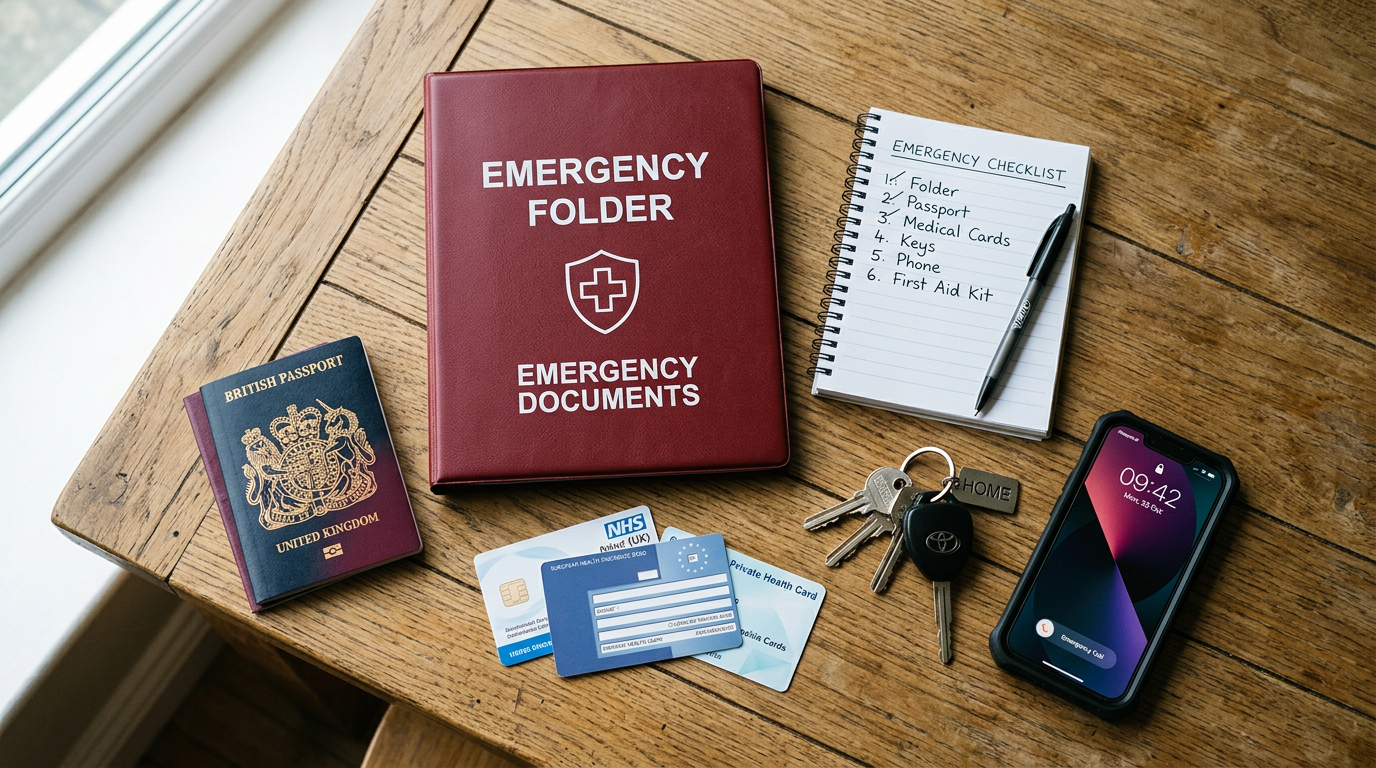
Create an “If Something Happens to Me” Folder
This may be the single most useful practical step in the entire article.
Create a folder titled:
If Something Happens to Me
Inside, include instructions written in plain language.
For example:
- Contact my daughter/son/brother/sister at this number.
- My attorney is ______.
- My will is located ______.
- My passport is located ______.
- My insurance information is ______.
- My preferred hospital is ______.
- My Philippine bank is ______.
- My U.S. bank is ______.
- My retirement accounts are held at ______.
- My wishes regarding burial or cremation are ______.
- My landlord/property manager is ______.
- Contact my embassy/consulate if necessary.
Review the folder once a year.
Ten minutes of updating could save your family weeks of confusion later.
If You Live Alone, Build a Local Safety Network
This is particularly important for single retirees.
Someone should notice if you disappear from your normal routine.
That does not require giving up your privacy.
It simply means developing relationships.
Know your neighbors.
Talk with your building security staff.
Have a friend you see regularly.
Give one trusted person an emergency family contact.
If you live in a condominium, consider giving management an emergency contact they can use if something happens inside your unit.
Independence is valuable.
Isolation can become dangerous.
Married Expats Need a Plan Too
Being married does not automatically solve every issue.
Your spouse should know where accounts, insurance policies, identification, and estate documents are located.
International couples may also have assets in two countries and family members in multiple jurisdictions.
If one spouse is Filipino and the other foreign, property and inheritance questions can become particularly important.
Do not wait until someone becomes seriously ill to understand how ownership and succession work.
Review Your Plan Every Year
Your situation will change.
You may open another bank account.
Move cities.
Buy a condominium.
Sell property back home.
Change insurance.
Marry.
Divorce.
Have grandchildren.
Change your mind about where you want to be buried.
Create the plan once, then review it annually.
A good time is around your birthday or at the beginning of every year.
This Is About Protecting the People You Love
Estate planning sounds like paperwork.
It is really about people.
Without a plan, someone you care about may have to determine what bank you used, where your passport is, whether you wanted to be cremated, how your rent gets paid, which attorney you worked with, and how to transport your remains halfway around the world.
They will be trying to figure all of that out while grieving.
You can remove much of that burden now.
A Simple Expat Emergency Checklist
Before considering your plan finished, make sure you have addressed the basics:
- A current will
- Emergency contacts in both countries
- An accessible list of financial institutions
- Updated beneficiaries
- Medical information
- Health insurance information
- Passport and visa copies
- Instructions concerning burial, cremation, or repatriation
- Attorney contact information
- Digital account plan
- Emergency funds
- A trusted person who knows where everything is
You may never need most of it.
That is the ideal outcome.
Final Thoughts
Retiring in the Philippines is usually about planning the next chapter of life.
This article deals with the end of it.
That may feel uncomfortable, but ignoring the subject does not make the problem disappear.
Living overseas creates additional responsibilities because your family, money, legal documents, and property may exist in more than one country.
You do not need to become an expert in international estate law.
You need to become organized.
Have a will.
Know where your money is.
Keep your beneficiaries current.
Tell someone where your documents are.
Write down your final wishes.
Keep an emergency contact in the Philippines and another back home.
And once the plan is complete, put it away and go enjoy retirement.
That is the real purpose of planning for the worst.
You can spend less time worrying about it and more time living the life you moved to the Philippines to enjoy.
Leave a Reply