
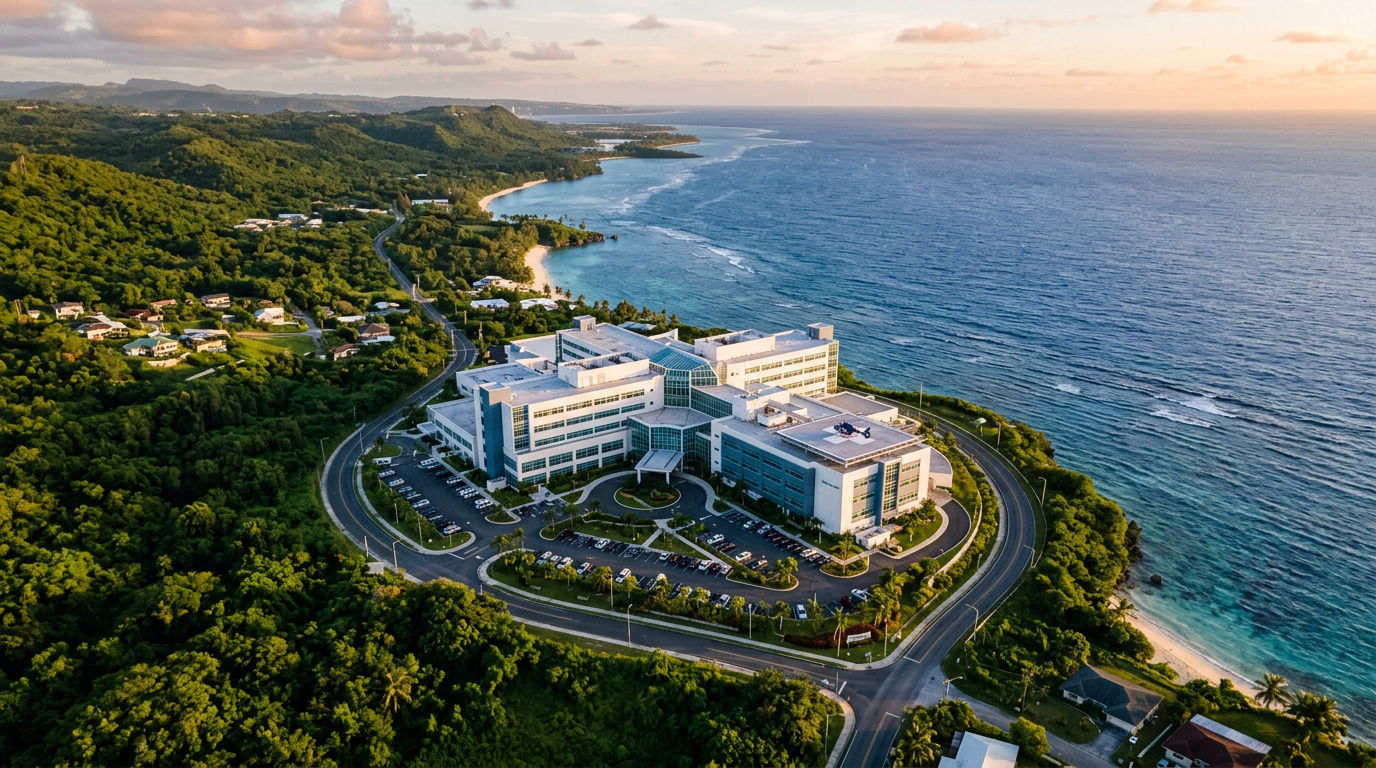
One of the biggest healthcare questions facing Americans who retire in the Philippines is surprisingly simple: What happens to my Medicare?
For most retirees, the answer can be frustrating. You may have spent decades paying into the Medicare system, continue paying a monthly premium for Medicare Part B, and then discover that Medicare generally does not cover healthcare received in the Philippines.
But there is an option relatively close to the Philippines that many American retirees may overlook.
Guam and the Northern Mariana Islands—including Saipan—are considered part of the United States for Medicare purposes.
That means an American living in the Philippines with Original Medicare could potentially travel to Guam or Saipan for Medicare-covered medical treatment rather than traveling all the way back to Hawaii or the continental United States.
For some retirees, that could become an important part of their long-term healthcare planning.
Why Medicare Works in Guam and Saipan
Medicare normally does not cover healthcare received outside the United States, except in a few limited circumstances. The important detail is how Medicare defines the United States.
According to Medicare, the United States includes the 50 states and Washington, D.C., as well as Puerto Rico, the U.S. Virgin Islands, Guam, American Samoa and the Northern Mariana Islands.
The Philippines is outside that coverage area. Guam and Saipan are not.
With Original Medicare, beneficiaries generally can receive covered care from Medicare-participating doctors and hospitals anywhere in the United States, including these territories.
This isn’t merely a technical definition. The Centers for Medicare & Medicaid Services has a Medicare Administrative Contractor responsible for processing Original Medicare Part A and Part B claims from Guam and the Northern Mariana Islands, along with California, Hawaii, Nevada and American Samoa.
What This Could Mean for a Retiree in the Philippines
Imagine an American retiree living in Cebu who needs a non-emergency medical procedure.
Having the procedure performed at a private hospital in the Philippines may mean paying for the treatment personally or relying on Philippine or international health insurance. Original Medicare generally isn’t going to pay simply because the patient is an American Medicare beneficiary.
But another possibility could be investigated: receiving the procedure from a Medicare provider in Guam or the Northern Mariana Islands.
Instead of flying thousands of additional miles to California, Texas, Florida or another mainland destination, the retiree could potentially travel to a U.S. territory in the western Pacific.
That doesn’t automatically mean Guam or Saipan will always be the best choice. It simply gives retirees another option worth knowing about.
Original Medicare Is the Important Distinction
There is an important catch.
The broad ability to use Medicare throughout the United States applies most clearly to Original Medicare—Parts A and B.
Original Medicare allows beneficiaries to use doctors and hospitals that take Medicare anywhere in the United States. Medicare specifically includes Guam and the Northern Mariana Islands in that definition.
Medicare Advantage works differently.
Medicare Advantage plans are offered by private insurance companies and frequently use provider networks and defined service areas. A Medicare Advantage plan based in Pennsylvania, California or another state should not automatically be assumed to cover planned treatment in Guam simply because Guam is a U.S. territory.
Some plans provide out-of-network or travel benefits, but the rules vary considerably.
Anyone living overseas who has Medicare Advantage should contact the plan directly before arranging treatment in Guam or Saipan.
Medicare Doesn’t Necessarily Mean Free Healthcare
Another misconception worth addressing is that using Medicare means the medical procedure won’t cost anything.
Original Medicare still has deductibles, coinsurance and other patient costs. For many Part B services, for example, beneficiaries generally pay 20 percent of the Medicare-approved amount after satisfying the applicable deductible.
Some retirees use Medicare Supplement Insurance, commonly called Medigap, to help cover some of those expenses.
The exact amount someone pays will depend on the service, provider and additional coverage they have.
You Still Need to Find a Medicare Provider
This may be the most important practical limitation.
Being in Guam or Saipan doesn’t mean that every doctor, clinic or medical facility automatically accepts Medicare.
Before purchasing an airline ticket, a retiree should identify the doctor or hospital, confirm that the provider accepts Medicare, verify that the specific procedure is covered and discuss the expected patient responsibility.
Medicare provides an online provider comparison service that can help beneficiaries locate participating providers.
For someone traveling from another country specifically for medical care, confirming everything before leaving the Philippines is especially important.
Guam Versus Saipan
Guam would probably be the first place many retirees should investigate because it has a larger population and healthcare system than the Northern Mariana Islands.
Saipan, however, shouldn’t automatically be dismissed. It is part of the Northern Mariana Islands and therefore also falls within Medicare’s definition of the United States.
The bigger question isn’t whether Medicare exists there. It is whether the particular medical service and appropriate Medicare provider are available there.
Specialized procedures may simply not be available locally. A patient with a complicated condition might still be referred to Hawaii or the continental United States.
For more routine procedures and specialist care, however, Guam in particular may deserve investigation.
Could This Work for Planned Medical Procedures?
Potentially, yes.
Consider medical needs that aren’t emergencies but can be scheduled in advance: certain diagnostic tests, specialist consultations, outpatient procedures, cataract treatment or other Medicare-covered services.
A retiree could first determine what the treatment would cost privately in the Philippines. Then he or she could investigate whether the same Medicare-covered service is available through a Medicare provider in Guam.
The calculation shouldn’t stop with the hospital bill.
Airfare, hotels, meals, transportation and the possibility of needing to remain near the hospital for follow-up appointments all need to be included.
There will undoubtedly be situations where simply paying a Philippine hospital is cheaper and easier. There could also be situations—particularly involving more expensive treatment—where using Medicare in Guam makes financial sense.
The important thing is knowing the option exists.
Medicare Still Doesn’t Solve Everyday Healthcare in the Philippines
This strategy should not be confused with having health insurance in the Philippines.
A retiree still needs a plan for ordinary medical care while living there.
Doctor visits, medications, emergency treatment and unexpected hospitalization can happen without enough warning to board a flight to Guam.
Some retirees choose to self-pay for routine Philippine healthcare while maintaining insurance for larger expenses. Others combine PhilHealth, a Philippine HMO, international health insurance or other coverage.
Medicare in Guam could potentially become another layer in that strategy rather than replacing local healthcare coverage.
There Is Another Reason to Think Carefully Before Dropping Medicare Part B
Americans moving overseas sometimes question whether they should continue paying their Medicare Part B premium when Medicare generally can’t be used where they’re living.
The Guam option adds another consideration to that decision.
Keeping Original Medicare may preserve access to Medicare-covered care when visiting the United States—including Guam and the Northern Mariana Islands. Dropping Part B can also have consequences if someone later decides to reenroll, including potential late-enrollment penalties and restrictions depending on the person’s circumstances.
That doesn’t mean every American living in the Philippines should automatically keep Part B. It does mean dropping it should be a deliberate decision rather than simply concluding, “Medicare doesn’t work in the Philippines, so I don’t need it.”
A Healthcare Bridge Across the Pacific
Guam is not a solution to the larger issue of Medicare coverage for Americans living permanently in the Philippines.
But it may provide something useful: a healthcare bridge.
An American retiree could potentially use affordable private healthcare in the Philippines for routine needs, maintain appropriate local or international insurance for emergencies, and investigate Guam for certain planned procedures where using Original Medicare could make financial sense.
For retirees living in the Philippines, particularly those in Cebu and other locations with reasonable access to international flights, that is an option worth remembering.
The bigger lesson is that retiring overseas doesn’t necessarily mean abandoning the American healthcare system completely.
Sometimes the nearest door back into that system may be much closer than the continental United States.
Important Disclaimer
Philippine Living Guide provides general educational and informational content and does not provide medical, insurance, legal or financial advice. Medicare rules, provider participation, insurance benefits and individual eligibility can change and vary according to personal circumstances. Before scheduling treatment or traveling for medical care, contact Medicare, your insurance provider and the healthcare facility directly to confirm current coverage, eligibility, provider participation and anticipated costs.
Official Medicare resources: Medicare.gov explains that Guam and the Northern Mariana Islands are considered part of the United States for Medicare purposes. Medicare beneficiaries can also use Medicare’s provider search tools to locate and compare participating healthcare providers. Living in the Philippines but Need Medicare? Guam and Saipan May Be an Option
Leave a Reply