
You’ve moved to the Philippines.
The boxes are unpacked—or perhaps you wisely didn’t bring many boxes at all.
You’ve found an apartment. You know where the supermarket is. You’ve figured out Grab. You have internet, a Philippine phone number and a favorite place for coffee.
You don’t have to get up for work tomorrow.
Or the next day.
Or ever again.
At first, that sounds wonderful.
Then one morning you wake up, look at the clock and realize something:
You have absolutely nothing you have to do today.
Welcome to retirement.
The Part of Philippine Retirement Nobody Advertises
Most discussions about retiring in the Philippines focus on getting here.
How much money do you need?
Which visa should you get?
Where should you live?
How much does a condo cost?
What about healthcare?
Those are important questions.
But eventually you solve most of them.
Then you’re left with a much bigger question:
What are you going to do with the next 20 or 30 years?
Moving to the Philippines can dramatically reduce your cost of living.
It can give you warm weather.
It can put beaches, mountains and some of Asia’s most interesting destinations within reach.
What it cannot automatically give you is a satisfying retirement.
You still have to build that yourself.
At First, Everything Is Interesting
The beginning is easy.
Going to the supermarket is interesting.
Riding in a jeepney is interesting.
Trying unfamiliar food is interesting.
Exploring your neighborhood is interesting.
Even going to immigration can feel like part of the adventure—at least the first time.
You visit beaches.
You explore malls.
You try restaurants.
You meet people.
You take pictures.
You post them online.
Friends back home tell you how lucky you are.
And you probably are.
But something eventually happens.
The Philippines stops being a destination.
It becomes home.
That’s when retirement really begins.
Paradise Eventually Has Tuesdays
Imagine living five minutes from a beautiful beach.
The first week, you visit every day.
The first month, perhaps several times a week.
Six months later?
Maybe you go Saturday.
There’s nothing wrong with that.
Human beings become accustomed to their surroundings remarkably quickly.
The spectacular ocean view eventually becomes the view outside your window. The tropical weather becomes the weather. The restaurant you couldn’t believe was so inexpensive becomes the place you order lunch.
Eventually, you’ll have ordinary days.
That’s why choosing a retirement destination based entirely on vacation experiences can be misleading.
You’re not really choosing where to vacation for the rest of your life.
You’re choosing where you want your ordinary days to happen.
Retirement Gives You Something You’ve Probably Never Had
Time.
An enormous amount of it.
Think about how much of your adult life was structured by work.
You woke up at a certain time because you had somewhere to be.
You interacted with coworkers because they were there.
You ate lunch at approximately the same time.
You knew what Monday meant.
You knew what Friday meant.
Even if you didn’t particularly like your job, it gave your week structure.
Then retirement removes it.
If you move overseas at roughly the same time, you may simultaneously lose your workplace, coworkers, familiar neighborhood, local friends, routines and perhaps regular contact with family.
That’s an enormous change.
And sunshine doesn’t automatically replace those things.
The Goal Isn’t to Stay Busy
There’s another trap.
Some retirees try to fill every minute.
Golf Monday.
Lunch Tuesday.
Volunteer Wednesday.
Excursion Thursday.
Dinner Friday.
You don’t need to recreate a work schedule.
One of the pleasures of retirement is finally having permission to do nothing occasionally.
Sleep late.
Read.
Watch a movie in the afternoon.
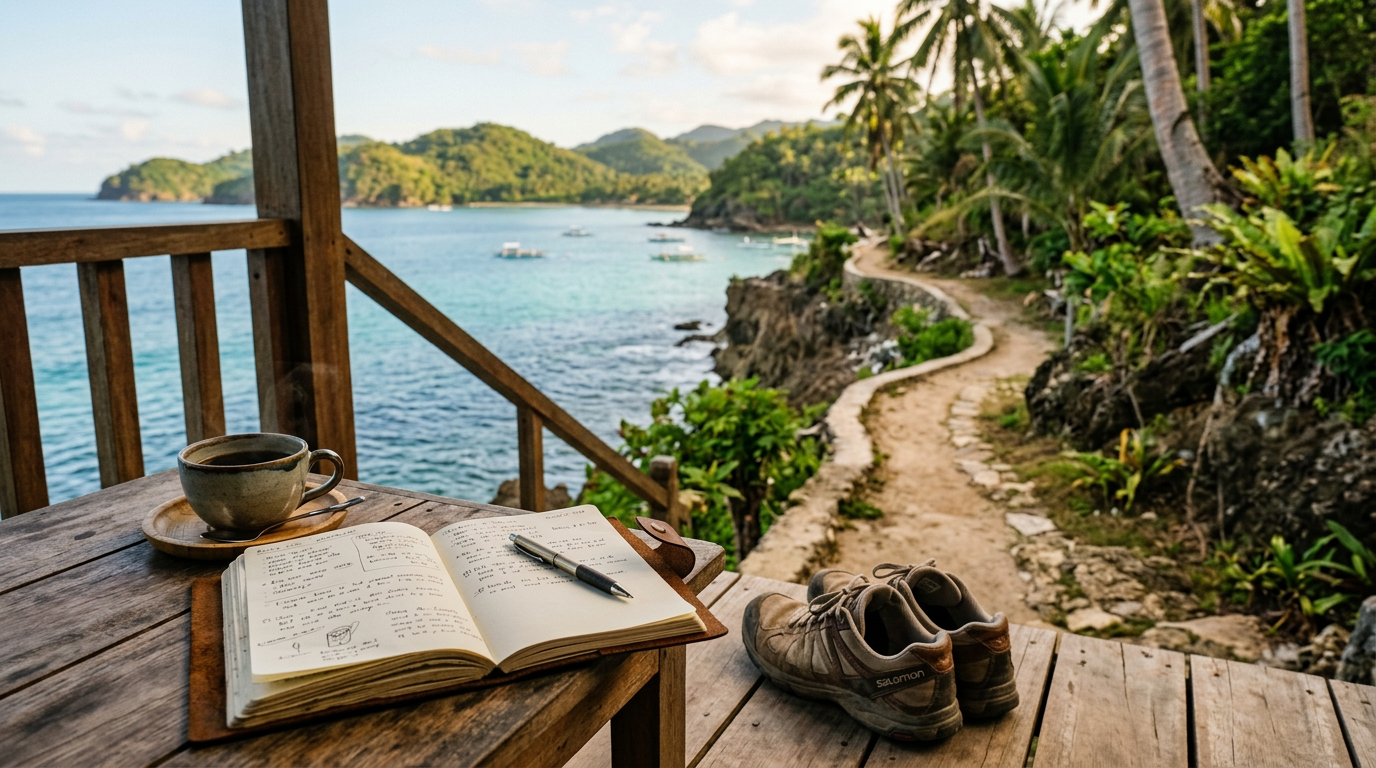
Sit outside with coffee for an hour.
Take a nap.
There’s nothing wrong with a slow life.
The difference is between choosing a quiet day and having nothing meaningful to do.
Those can feel very different.
Build a Morning
One of the easiest ways to give retirement structure is to create a morning routine.
It doesn’t have to be complicated.
Wake up.
Make coffee.
Read the news.
Walk for 30 minutes.
Go to the gym.
Swim.
Have breakfast.
Learn some Filipino or Cebuano.
Work on a hobby.
Suddenly it’s 10:30.
You’ve started your day without needing a boss to tell you where to be.
Morning routines are particularly useful in the Philippines because the earlier hours can be much more comfortable for walking and outdoor activities than the middle of a tropical afternoon.
Your routine doesn’t need to be productive.
It needs to be yours.
Become a Regular Somewhere
This sounds trivial.
It isn’t.
Find a café.
Restaurant.
Gym.
Barbershop.
Bakery.
Church.
Public market.
Somewhere you visit regularly.
Eventually people recognize you.
Someone knows your coffee order.
You say hello to the same security guard.
You recognize the person working behind the counter.
Those small interactions are part of how a foreign country gradually becomes your neighborhood.
You don’t build a community by sitting inside your condo waiting for one to appear.
Don’t Build Your Entire Social Life Around Expats
Other expats can be enormously helpful.
They understand what it’s like to move overseas.
They can recommend doctors, explain where to find something, help you understand local customs and tell you about mistakes they made.
You’ll probably develop friendships with some of them.
But there’s a danger in creating a small version of America inside the Philippines.
If you only eat Western food, socialize exclusively with foreigners, complain about Philippine customs and spend every evening discussing what’s wrong with the country you left, you’ve missed a large part of the experience.
You’re living in the Philippines.
Get to know Filipinos.
Learn about the culture.
Try the food.
Attend local events.
Learn a little of the language.
Ask questions.
Listen.
You don’t have to stop being American to become part of the community where you live.
Learn Something
Retirement is a wonderful time to become bad at something new.
Learn Filipino.
Or Cebuano, Hiligaynon or whichever language is commonly spoken where you live.
Learn photography.
Learn to cook Filipino food.
Learn scuba diving.
Learn guitar.
Learn gardening in a tropical climate.
Take an online course.
Write.
Paint.
Study Philippine history.
You’ve spent decades becoming competent at things because your livelihood depended on it.
Retirement gives you permission to learn something simply because it’s interesting.
Use the Philippines
One of the greatest advantages of retiring here is that you don’t have to experience the Philippines like someone on a two-week vacation.
You have time.
Instead of trying to see six destinations in 14 days, spend four days in Bohol.
Next month visit Siquijor.
Later explore Palawan.
Take a weekend in Manila.
Visit Baguio when you want cooler weather.
Explore places that don’t appear on every tourist itinerary.
You don’t need a bucket list that you frantically complete.
The entire country is outside your door.
And Use Asia
Your new home also changes your relationship with the rest of the world.
Thailand, Vietnam, Malaysia, Singapore, Indonesia, Japan, South Korea and other destinations are much closer than they were when you lived in the United States.
That doesn’t mean international travel is always cheap or convenient.
But retiring in the Philippines can turn places that once required a major vacation into realistic regional trips.
You could decide that part of your retirement budget will specifically fund travel.
Not constantly.
Maybe three or four trips a year.
That gives you something else retirement needs:
things to look forward to.
Volunteer
You don’t have to start a charity.
You don’t need to save anyone.
But if you spent your working life developing skills, some of those skills may still be useful.
Schools.
Animal organizations.
Community projects.
Churches.
Environmental groups.
Local nonprofits.
Mentoring.
The right opportunity will depend on your interests and on local rules governing foreign participation and work.
The point isn’t to recreate employment without a paycheck.
It’s to find ways to contribute if contribution is something that gives your life meaning.
Retirement doesn’t have to mean becoming unnecessary.
Keep a Project
A project can be surprisingly powerful.
Write a book.
Start a garden.
Research your family history.
Restore something.
Create a website.
Learn photography and document your travels.
Build a YouTube channel if that’s something you genuinely enjoy—not because someone told you every expat needs one.
Study a subject you’ve always been curious about.
Your project doesn’t need to make money.
It simply gives you something that isn’t finished yet.
Something you’re excited to continue tomorrow.
Take Care of Your Body
Retirement can make healthy living easier.
It can also make unhealthy living much easier.
You finally have time to walk every morning.
You have access to tropical fruit, fresh vegetables and seafood.
You can swim.
Go to the gym.
Exercise at home.
Get enough sleep.
But you also have unlimited time to sit.
And restaurants are inexpensive.
Alcohol can be inexpensive.
Nobody expects you to wake up at 6 a.m. for work.
A few beers in the afternoon can gradually become a few beers every afternoon.
This deserves attention.
You don’t need to become a fitness fanatic.
But your retirement lifestyle should help you remain capable of enjoying your retirement.
The Bar Can Become a Routine Too
Many Philippine cities with significant foreign populations have bars where expats gather.
There’s nothing inherently wrong with that.
Meet friends.
Watch sports.
Have a beer.
Enjoy yourself.
The problem starts when the bar becomes your primary social network, entertainment and daily routine.
Retirement can remove many of the guardrails that kept certain behaviors in check during working life.
There is no Monday morning meeting.
Nobody cares if you’re hungover.
You have money coming in regardless.
That’s freedom.
But freedom still requires judgment.
Relationships Aren’t a Retirement Plan
Some single retirees come to the Philippines partly because they’re interested in dating.
There’s nothing wrong with that.
You may meet someone and build an extraordinary relationship.
But a partner shouldn’t become your entire Philippine life.
You still need interests.
Friends.
Activities.
Independence.
A reason to get out of bed that doesn’t depend entirely on another person.
That’s healthier for you and healthier for the relationship.
And if the relationship ends, your entire reason for living in the Philippines doesn’t disappear with it.
Loneliness Can Happen in Paradise
This isn’t discussed enough.
You can be surrounded by people and still be lonely.
Your children may be thousands of miles away.
Your longtime friends are asleep when you’re awake.
Birthdays happen without you.
Grandchildren grow.
Friends become ill.
Life continues back home.
Video calls help enormously.
Social media helps.
Cheap international communication makes overseas retirement easier than it has ever been.
But it isn’t the same as being there.
There may be days when you wonder what you’re doing so far from everyone you’ve known.
That doesn’t necessarily mean moving was a mistake.
It means you’re human.
The answer isn’t pretending you don’t miss anyone.
It’s deliberately building relationships in your new home while maintaining the important ones in your old one.
Don’t Live Entirely Online
This can happen surprisingly easily.
You wake up.
Check Facebook.
Watch YouTube.
Read American news.
Argue about American politics.
Watch American television.
Talk online with Americans.
Order food.
Go to sleep.
Technically, you’re living in the Philippines.
But very little of your life actually takes place there.
Technology makes overseas retirement possible.
Don’t let it prevent you from experiencing the place you moved to.
Go outside.
Give Your Week Some Anchors
You don’t need a rigid schedule.
But having a few recurring activities can make retirement feel more grounded.
Perhaps Monday morning is the gym.
Tuesday you meet someone for coffee.
Wednesday is your project day.
Thursday you swim.
Friday night you eat somewhere you haven’t tried before.
Saturday is for exploring.
Sunday is deliberately quiet.
Next week can be completely different.
The activities aren’t important.
The anchors are.
They prevent seven identical days from blending together.
Have Something Bigger Than Today
One of the subtle challenges of retirement is losing milestones.
During working life there was always something coming.
A project.
Promotion.
Vacation.
Deadline.
Quarter.
Holiday.
Retirement can become an endless stretch of pleasant days unless you create your own milestones.
Plan a trip.
Train for a 5K.
Take a course.
Learn enough Filipino to hold a basic conversation by Christmas.
Visit ten Philippine islands.
Write 20,000 words.
Lose ten pounds.
Read twelve books.
Host dinner for friends.
Give yourself something that’s happening three months from now.
Anticipation is part of enjoying life.
Create Your Philippine Retirement Week Before You Move
If you’re still planning your retirement, try an experiment.
Take a blank piece of paper.
Write:
Monday.
Tuesday.
Wednesday.
Thursday.
Friday.
Saturday.
Sunday.
Now imagine you’ve already moved to the Philippines.
You don’t work.
What are you doing?
Not during your first week.
Not during vacation.
Imagine you’ve lived here for 18 months.
What gets you out of the house Monday morning?
Who do you see Wednesday?
What do you do Friday afternoon?
What are you looking forward to next month?
If the only answer is “go to the beach,” keep thinking.
The beach is wonderful.
But it isn’t a life.
You Don’t Need a Purpose Statement
Retirement advice sometimes makes this sound unnecessarily profound.
You don’t necessarily need to discover your life’s grand purpose.
Maybe your retirement is about simple things.
Staying healthy.
Having good friends.
Traveling.
Learning.
Eating well.
Helping occasionally.
Calling your children.
Watching sunsets.
Laughing.
Having enough money.
Waking up without an alarm clock.
That’s a perfectly legitimate life.
Purpose doesn’t have to be impressive.
It just has to matter to you.
A Lower Cost of Living Isn’t Enough
This may be the most important lesson.
The Philippines can potentially solve a financial problem.
A retirement income that feels tight in the United States may support a considerably more comfortable lifestyle here.
Housing can cost less.
Services can cost less.
Your retirement money may stretch further.
That’s powerful.
But a lower cost of living can only fund your retirement.
It can’t give your retirement a purpose.
That’s your job.
Eventually, the Philippines Becomes Home
One day something interesting happens.
You return from a trip.
Your plane lands in Cebu, Manila, Clark or another Philippine airport.
You collect your bag.
You walk outside.
And instead of thinking, “I’m back in the Philippines,” you think:
I’m home.
Not because every day is exciting.
Not because you live beside a beach.
Not because everything is inexpensive.
Because you’ve built routines.
You know people.
People know you.
You have favorite places.
You have plans next week.
You have something you’re working on.
Your life is here.
That’s when you’ve accomplished something much more important than moving overseas.
You’ve stopped being someone who retired to the Philippines.
You’ve become someone who’s simply living in the Philippines.
And perhaps that’s the retirement you were looking for all along.
The Philippine Living Guide Challenge: Build Your Week
Before moving—or during your first few months here—design a normal Philippine retirement week.
Include something for your health, something social, something you enjoy doing alone, something that challenges your mind and something you’re looking forward to.
Then leave plenty of empty space.
You’re retired, after all.
The goal isn’t to stay busy.
The goal is to build a life you don’t need a vacation from.
Disclaimer
Philippine Living Guide provides general educational and informational content for people considering travel, relocation and retirement in the Philippines. Everyone experiences retirement and overseas living differently. This article isn’t medical, mental-health, financial, legal or immigration advice. Readers should consider their own circumstances and seek appropriate professional guidance when needed.
Leave a Reply