
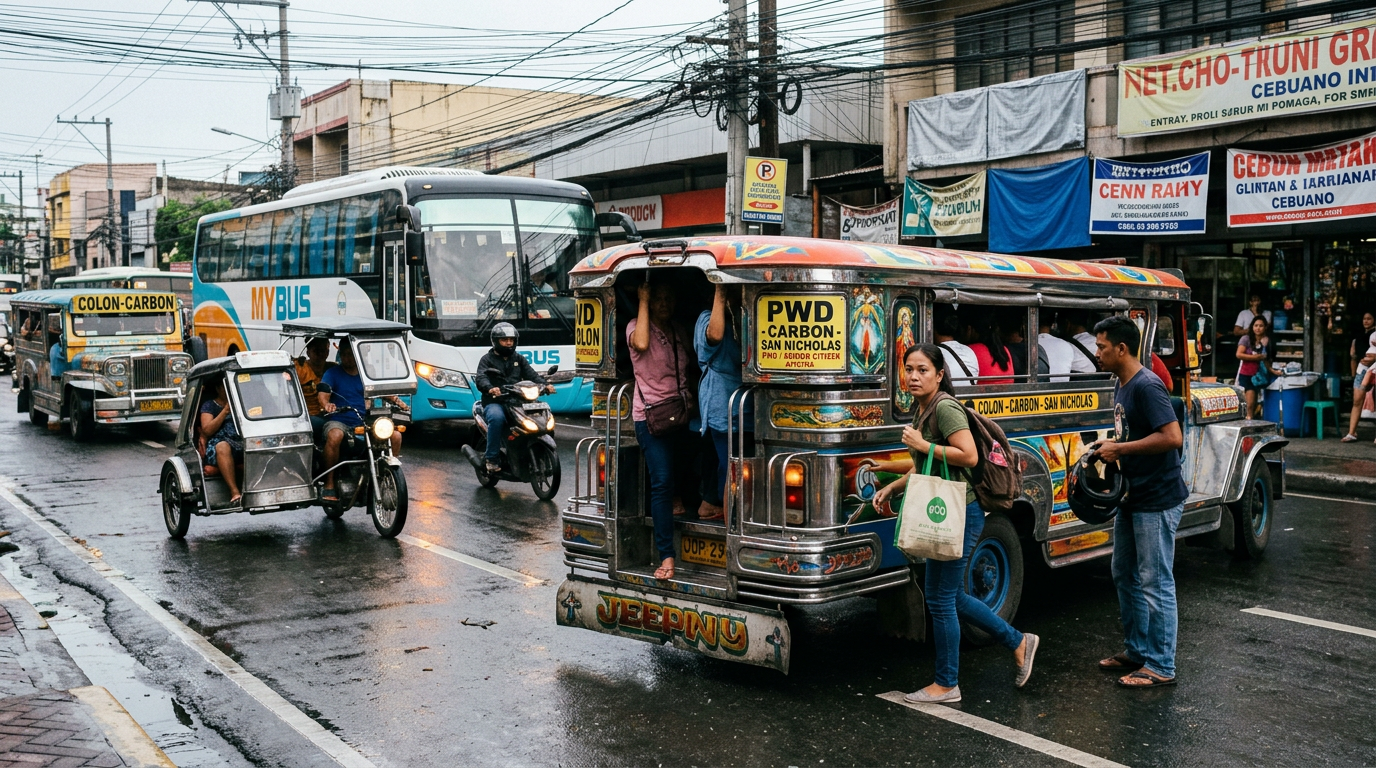
Can you live in the Philippines without a car? For many American retirees, the answer is yes—but only if they choose the right neighborhood. The Philippines offers taxis, ride-hailing apps, jeepneys, buses, tricycles and delivery services, yet availability and convenience vary enormously from one location to another.
Giving up car payments, maintenance and parking can be appealing. But a car-free retirement is about much more than saving money. It is about being able to buy groceries, visit doctors, meet friends and get home comfortably, including on rainy days or when your mobility changes.
Can You Really Live in the Philippines Without a Car?
Yes, many people do. In a neighborhood with shops, restaurants, pharmacies, medical services and reliable transport nearby, owning a car can be unnecessary. In a remote subdivision, hillside community or rural area, the same decision may leave you dependent on infrequent rides, difficult walking conditions or friends with vehicles.
The question is not whether the Philippines has transportation. It is whether your specific home makes everyday life easy without a private vehicle. Our guide to transportation and traffic in the Philippines explains the different transport systems; this article focuses on what it feels like to depend on them every day.
Why Retirees Consider Giving Up the Car
Car ownership has costs that do not disappear when the vehicle is parked: purchase or financing, registration, insurance, maintenance, repairs, fuel, parking and depreciation. Urban congestion can also turn a short errand into a stressful trip. For some retirees, paying for occasional rides makes more sense than maintaining a vehicle.
But car-free living is not automatically cheaper. Daily private rides, delivery fees and long-distance trips can add up. The savings depend on how often you travel, how far you live from essentials and whether you can comfortably use lower-cost transportation.
The Transportation Options You Would Actually Use
Grab and other app-based services can be convenient where they operate, but coverage, vehicle availability and pricing vary by city, neighborhood, time and weather. Conventional taxis are another option in many urban areas. Neither should be assumed available at your doorstep around the clock.
Jeepneys and buses can be economical for familiar routes, though they may require waiting, stepping up into vehicles and walking between stops. Tricycles and local motorcycle-based services fill gaps in some communities, but availability, operating areas, passenger comfort and local rules differ. Motorcycles are not suitable for everyone, particularly travelers with balance or mobility concerns.
For broader background on these modes, see Transportation and Traffic in the Philippines. The important test is to ride the routes you would actually need, not just watch transport pass your hotel.
Choose the Neighborhood Before You Choose the Apartment
Location is the foundation of a car-free lifestyle. An attractive apartment may be inexpensive precisely because it is far from groceries, hospitals and restaurants. Saving on rent can be offset by daily fares and the time spent getting around.
Walk or travel from a prospective apartment to a supermarket, pharmacy, clinic, bank or ATM, coffee shop and a place to meet friends. Check how easy the trip is at midday, after dark and during rain. Our first Philippine apartment checklist covers additional questions to ask before signing a lease.
The 15-Minute Neighborhood Test
Imagine an ordinary Tuesday. You need milk, a prescription refill, cash and lunch. Can you complete those errands without organizing a complicated series of rides? A genuinely convenient neighborhood puts several essentials within a manageable journey rather than merely appearing central on a map.
Try the route in real conditions. Sidewalks may be narrow, obstructed, uneven or absent. Heat and sudden downpours can make a short distance feel longer, and a pedestrian crossing may be more difficult than it looks. For someone with knee, ankle or back pain, the difference between a five-minute walk on a smooth path and one over broken pavement is significant.
Grocery Shopping Without a Car
Smaller, more frequent grocery trips can be easy if a supermarket or public market is close. Large shopping runs are different: carrying bottled water, rice, detergent and frozen food in tropical heat may not be practical. A taxi or ride-hailing car for the trip home can solve the problem, but it should be included in the budget.
Delivery services are useful where available, yet delivery fees, substitutions, minimum orders and limited coverage can change the economics. Test at least two ways to get groceries before committing to a location. A good neighborhood offers options rather than forcing every purchase through one app.
Medical Appointments Are the Real Test
For older retirees, the ability to reach a hospital matters more than being near a shopping mall. A specialist appointment may require an early departure, several hours at a clinic or a trip across the city. During an urgent illness, a normal ride-hailing service may be unavailable or inappropriate for a medical emergency.
Identify a primary hospital, a backup facility and a realistic route to both. Know the local emergency contact arrangements and ask how emergency transport is handled in your building or barangay. See our healthcare guide for American retirees and the Philippines emergency preparedness plan for related planning.
What About Retirees With Limited Mobility?
A person who can walk several kilometers comfortably has very different transportation needs from someone who cannot stand long, climb steep steps or board a high vehicle. Do not design your retirement around the healthiest version of yourself. Think about the days when pain, fatigue or illness make movement harder.
Look for buildings with dependable elevators, step-free entry where possible, nearby pickup points and practical access to taxis or cars. Ask whether a driver can stop close to the entrance. If you need regular assistance, read our guide to hiring household help and caregivers in the Philippines.
A Sample Car-Free Transportation Budget
Rather than quote fares that vary by route and city, build a budget around your own expected trips. As an illustrative example, suppose you make eight short private-vehicle trips at ₱180 each, four longer trips at ₱350 each, and spend ₱600 on delivery or occasional public transport during the month. That totals ₱3,440.
Now imagine you rely on private rides twice a day for twenty days at an average ₱220 per ride. That alone is ₱8,800, before longer journeys and delivery charges. These are hypothetical figures, not live fare quotes. Their purpose is to show why frequency matters more than any single advertised fare.
Compare that total with the full cost of owning a vehicle, not just the fuel bill. Also account for convenience, travel time and how much independence each option provides. The hidden costs of moving to the Philippines guide helps put transportation alongside other budget surprises.
Which Philippine Cities Are Better for Car-Free Living?
Car-free life tends to be more practical in selected walkable, service-rich neighborhoods of major urban areas. Parts of Metro Manila, Cebu City and Iloilo City can provide combinations of shops, restaurants, clinics and transportation. Certain neighborhoods in Dumaguete and other smaller cities may also work, but fewer transport alternatives can make exact location more important.
Do not treat an entire city as walkable or transit-friendly. One district may be convenient while a nearby hillside subdivision requires a vehicle for every errand. We already have a dedicated comparison of the best Philippine cities to live without a car, which is the right companion article for choosing a destination.
The broader trade-off between urban convenience and a quieter location is explored in City Convenience or Island Life?.
When Living Without a Car Becomes Frustrating
Car-free living can lose its appeal when trips require multiple connections, transport disappears during heavy rain or a home is far from essential services. Waiting outside in high heat, negotiating uneven sidewalks or struggling to carry purchases can make simple errands tiring. Families with frequent school or work trips may face different trade-offs from retirees.
A remote beach property can be wonderful for occasional stays but inconvenient as a permanent home without transport. The more isolated the location, the more important a backup driver, vehicle rental or reliable local arrangement becomes.
Should You Hire a Driver Instead?
For someone who travels infrequently but wants door-to-door comfort, booking a car and driver for specific outings may be more practical than buying a vehicle. A regular driver arrangement can help with appointments or shopping, but its cost and availability should be confirmed locally.
If you directly employ a driver, understand the relevant Philippine employment rules rather than assuming they are identical to the rules for domestic workers. Our household help guide discusses why the employment category matters.
Rainy Season Changes the Equation
A neighborhood that feels walkable during a sunny vacation may be unpleasant or difficult during prolonged rain. Flooded streets, wet pavement, fewer available rides and longer travel times can change the entire experience. Check whether the building entrance, nearby crossings and main roads remain usable during bad weather.
Ask long-term residents about recurring flooding and test your transport options in less-than-perfect conditions. A car-free plan should work on an ordinary rainy day, not just on the best afternoon of your visit.
Safety and Independence After Dark
An active commercial neighborhood can make evening errands and social outings easier, but lighting, crossings and transport availability vary. A route that is comfortable at noon may be less convenient at night. Consider how you would return from dinner or a medical appointment without depending on an unfamiliar ride.
Keep a charged phone, a secondary payment method and the address of your residence saved in a form you can show a driver. Do not assume that an app will work during every outage. For solo retirees, building a support network while retiring alone is an important complement to transportation planning.
Try 30 Days Without a Car Before Deciding
The most reliable test is not a weekend sightseeing trip. Rent a place in the neighborhood you are considering and live your normal routine for several weeks. Buy groceries, visit a clinic, use local transport, meet friends and return home after dark. Record how much each journey costs and how long it takes.
During that trial, avoid borrowing a car every time the system becomes inconvenient. You want to discover what daily independence actually requires. Our 30-day Philippines test-drive guide and first 90 days after moving provide a framework for testing a location before making long-term commitments.
A Simple Decision Checklist
Before deciding to live without a car, answer these questions: Can I reach groceries, a pharmacy and everyday services without exhausting myself? Can a car pick me up close to my building? Is a suitable hospital realistically accessible? What happens when it rains? Do I have backup transport when an app fails? Does my monthly transport budget remain reasonable if I need more rides as I age?
If the answers are mostly yes, car-free retirement may be comfortable and financially sensible. If several answers depend on good weather, perfect health or one helpful neighbor, reconsider the neighborhood before concluding you need to buy a car.
The Bottom Line: Buy Convenience, Not Necessarily a Vehicle
Living in the Philippines without a car can be one of the genuine conveniences of retirement, especially when you choose a neighborhood built around your everyday needs. The best arrangement is not the one with the fewest transportation expenses on paper. It is the one that lets you shop, socialize, receive healthcare and get home safely without constant logistical effort.
Start by choosing the right location, testing the real routes and budgeting honestly. You may find that occasional paid rides offer more freedom than owning a vehicle. Or you may discover that a different neighborhood is the better solution. Either way, make the decision based on daily life rather than vacation impressions.
Car-Free Retirement: Neighborhood Scorecard
Before signing a lease, use this quick checklist to compare neighborhoods. A place that fails several essentials may be cheaper in rent but more expensive in time, transport and frustration.
- Groceries and a pharmacy are accessible without a difficult journey.
- At least one dependable transport option serves the building.
- Drivers can pick up and drop off close to the entrance.
- Hospital and clinic routes are realistic for routine and urgent needs.
- Sidewalks, crossings and building access suit your mobility.
- Trips remain manageable during rain and after dark.
- Monthly transport and delivery costs fit your retirement budget.
- You have a backup when an app, driver or payment system fails.
Frequently Asked Questions
Do I need a car to retire in the Philippines?
Not necessarily. Many retirees can manage without one in service-rich neighborhoods, but the answer depends on walking conditions, transport availability, healthcare access and personal mobility.
Is Grab available everywhere in the Philippines?
No. Coverage and vehicle availability vary by location and time. Confirm service in your specific neighborhood rather than assuming nationwide availability.
Is it cheaper to use taxis than own a car?
It can be, particularly if you make relatively few trips. Compare your expected monthly rides and delivery charges against the full costs of owning and maintaining a vehicle.
What is the best way to test car-free living?
Stay in your preferred neighborhood for several weeks and complete normal errands without a private vehicle. Include medical visits, grocery trips, rainy days and evening travel in the test.
Note: Transportation routes, ride-hailing coverage, fares, accessibility and local rules can change. Verify services and costs in your specific location before signing a lease or making financial commitments.
Leave a Reply